Sudan's Escalating Conflict: Over 200,000 Displaced in Months
Margriet van Dijk ·
Listen to this article~4 min
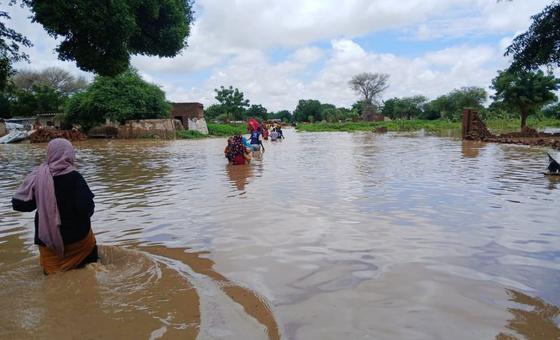
Escalating violence in Sudan has displaced at least 200,000 more people since late 2025, with flooding worsening the crisis. Here's what's happening and why it matters.
The humanitarian crisis in Sudan is reaching a breaking point, and the numbers are staggering. According to the United Nations International Organization for Migration (IOM), the escalation of fighting since late 2025 has forced at least 200,000 more people to flee their homes. That's not a slow trickle—that's a flood of human suffering, and it's happening right now.
When you hear a number like 200,000, it's easy to gloss over it. But think about it this way: that's roughly the population of a mid-sized American city like Syracuse, New York, or Brownsville, Texas. Imagine everyone in that city packing up whatever they can carry and walking away from everything they've ever known. That's the reality for these families.
### The Perfect Storm of Violence and Nature
What makes this situation even more devastating is that it's not just bullets and bombs driving people from their homes. The region is also being hammered by catastrophic seasonal flooding. It's a double blow that's pushing an already fragile population over the edge.
The floods aren't just an inconvenience—they're destroying what little shelter remains. Makeshift camps are being washed away, and the few roads that were still passable for aid deliveries are now underwater. Aid workers on the ground are describing scenes of absolute desperation.
### Who Is Being Affected?
This displacement isn't hitting everyone equally. The hardest-hit communities are those that were already vulnerable before the conflict even started. We're talking about:
- Families who had already been displaced once and were trying to rebuild their lives
- Elderly people who can't move quickly when the fighting gets close
- Children who are missing weeks of school and are now facing the added trauma of flooding
- Pregnant women and new mothers who need medical care that's no longer accessible
The combination of violence and natural disaster creates a nightmare scenario where there's simply no safe place to go. When you run from war, you might find a temporary haven. But when that haven is also underwater, where do you turn?
### The Ripple Effect of Displacement
This isn't just a Sudanese problem—it's a regional one. When 200,000 people are forced to move, they don't just disappear. They head to neighboring countries, to overcrowded refugee camps, or to urban centers that are already struggling to provide basic services.
The strain on resources is immense. Food prices are spiking, clean water is becoming scarcer by the day, and sanitation facilities are overwhelmed. In many camps, there's one latrine for every 200 people. That's a public health emergency waiting to happen.
### What Can Be Done?
It's easy to feel helpless when you're thousands of miles away, but there are things that matter. The IOM and other humanitarian agencies are on the ground, but they're severely underfunded. They need resources to provide emergency shelter, clean water, and medical care.
"We're racing against time," a field coordinator told us. "Every day we wait means more families sleeping in the open, more children going hungry, more lives lost to preventable causes."
The international community needs to step up. Diplomatic pressure on the warring parties to respect ceasefires is crucial, but so is the practical work of keeping people alive while negotiations drag on.
### The Human Cost Behind the Numbers
Behind every statistic is a person with a name, a story, and a future that's now hanging by a thread. A mother who lost her home twice. A father who walked 60 miles with his three kids to find safety. A grandmother who's now sleeping on a plastic sheet in a field, wondering if she'll live to see her family reunited.
This crisis isn't going to make headlines every day, but it's not going away either. The world needs to pay attention—not just for a week or a month, but for as long as it takes to find a lasting solution.
The people of Sudan have endured too much for too long. They deserve more than our sympathy. They deserve action.