Sudan's Escalating Conflict Displaces 200,000 More in Months
Emily Johnson ·
Listen to this article~5 min
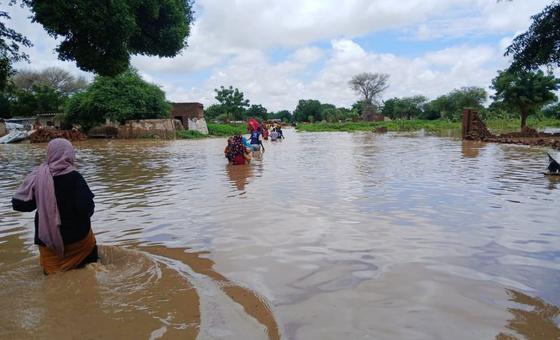
Fighting in Sudan since late 2025 has displaced at least 200,000 more people, with devastating floods making the humanitarian crisis even worse. Here's what's happening.
### A Crisis That Keeps Growing
The numbers coming out of Sudan are staggering. On Wednesday, the United Nations' International Organization for Migration (IOM) reported that the escalation of fighting in the country since late 2025 has forced at least 200,000 more people from their homes. That's not a small number—that's roughly the population of a mid-sized American city like Syracuse, New York, all uprooted in just a few months.
And here's the thing that makes it even harder to wrap your head around: this isn't a new crisis. It's an ongoing one that keeps getting worse. The conflict has been simmering for years, but the recent spike in violence has pushed already vulnerable communities past their breaking point.
### What's Driving People From Their Homes?
The root cause is simple but devastating: war. Since the end of 2025, fighting has intensified across multiple regions of Sudan. We're talking about clashes between rival factions, airstrikes hitting residential areas, and armed groups taking control of towns and villages. For ordinary families, staying put simply isn't an option anymore.
But the violence isn't the only problem. The rainy season has brought catastrophic flooding that's making an already dire situation nearly unbearable. Imagine fleeing gunfire only to wade through chest-deep floodwaters with your children and whatever belongings you could carry. That's the reality for thousands of Sudanese families right now.
### A Humanitarian Disaster in Real Time
The combination of conflict and flooding has created what aid workers are calling a perfect storm. Here's what that looks like on the ground:
- **Displacement camps** are overflowing, with families sleeping in the open or in makeshift shelters with no protection from the elements.
- **Clean water is scarce**, and the flooding has contaminated many of the water sources that are still accessible.
- **Disease is spreading**—malaria, cholera, and other waterborne illnesses are on the rise in displacement sites.
- **Food supplies are running dangerously low**, with supply chains disrupted by both the fighting and the floodwaters.
### The Human Cost You Don't Hear About
Behind those 200,000 numbers are real people with real stories. There's the mother who walked 30 miles with her three children after their village was attacked. There's the elderly man who lost his farm—his entire livelihood—to the floods, and then lost his home to the fighting. There's the teenager who's now the head of her household because her parents didn't survive.
These are the faces of a crisis that rarely makes headlines in the United States. But just because we don't see it on our evening news doesn't mean it's not happening. And it doesn't mean it won't have ripple effects far beyond Sudan's borders.
### Why This Matters Beyond Sudan
You might be wondering why a conflict in a country thousands of miles away should matter to you. Here's the thing: displacement on this scale doesn't stay contained. When 200,000 people are forced from their homes in a matter of months, they go somewhere. That puts pressure on neighboring countries like Chad, South Sudan, and Egypt, which are already struggling to host millions of refugees.
The instability also creates a breeding ground for extremist groups, human trafficking networks, and other threats that don't respect national borders. And on a purely human level, we're talking about a generation of children growing up without schools, without healthcare, and without any sense of security.
### What's Being Done
The IOM and other UN agencies are on the ground, working to provide emergency shelter, clean water, and medical care. But they're stretched thin. Funding is limited, access to affected areas is often blocked by the fighting, and the sheer scale of the need is overwhelming.
Aid organizations are calling on the international community to step up. They need money, yes, but they also need diplomatic pressure on the parties involved in the conflict to allow humanitarian access. Without that, even the most well-funded relief effort will struggle to reach the people who need it most.
### Looking Ahead
The situation in Sudan is not going to resolve itself quickly. The fighting shows no signs of stopping, and the floodwaters won't recede overnight. What we're likely to see in the coming months is more displacement, more suffering, and more families torn apart by forces entirely beyond their control.
But here's the thing about crises like this: they also bring out the best in people. Neighbors sharing what little they have. Local volunteers risking their lives to help strangers. Aid workers staying in dangerous conditions because they refuse to abandon the people they serve.
If you're looking for a reason to pay attention to Sudan, that's it. Not just because of the scale of the suffering, but because of the resilience and humanity of the people enduring it. They deserve better than what they're getting, and they deserve to know that the rest of the world hasn't forgotten them.