Sudan's Escalating Conflict Is Forcing Hundreds of Thousands From Their Homes
Jessica Davis ·
Listen to this article~5 min
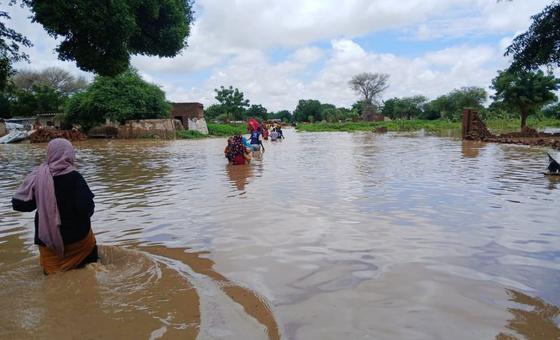
Sudan's escalating conflict has displaced over 200,000 more people since late 2025, with seasonal flooding worsening the crisis. Here's what's happening and why it matters.
The numbers are staggering, and they keep climbing. According to the United Nations' International Organization for Migration (IOM), the escalation of fighting in Sudan since late 2025 has forced at least 200,000 more people to flee their homes. That's on top of the millions already displaced by this brutal conflict. And if that wasn't devastating enough, the region is also being hit by catastrophic seasonal flooding that's making an already dire humanitarian situation even worse.
It's hard to wrap your head around what that actually means for real people. We're not talking about statistics on a spreadsheet. We're talking about families who woke up one morning to the sound of gunfire and had to make an impossible choice: stay and risk everything, or grab what they could carry and run. Most of them ran.
### A Crisis That Keeps Getting Worse
The conflict in Sudan isn't new. It's been simmering and boiling over for years now, but the recent escalation has pushed things to a breaking point. Since the end of 2025, the fighting has intensified in several key regions, forcing entire communities to scatter. The IOM's latest report paints a grim picture: more than 200,000 people have been newly displaced in just the last few months alone.
What's particularly heartbreaking is that many of these people had already been displaced once before. They'd found some semblance of safety, maybe set up a makeshift home, tried to rebuild a life. And now they're being uprooted all over again. That kind of repeated trauma takes a toll that's hard to measure.
### Nature Adding Insult to Injury
As if war wasn't enough, the seasonal rains have arrived with a vengeance. The flooding in Sudan this year has been especially destructive, washing away shelters, destroying crops, and cutting off access to clean water. For people who've already lost everything, this is a cruel twist. You can't escape the fighting only to drown in floodwaters or die from waterborne diseases.
The combination of conflict and natural disaster is creating a perfect storm of human suffering. Aid organizations are struggling to reach the most vulnerable populations because roads are either destroyed by bombs or submerged under water. It's a logistical nightmare that's costing lives every single day.
### The Human Cost Behind the Numbers
Let me put this in perspective. Two hundred thousand people is roughly the population of a mid-sized American city. Imagine the entire population of, say, Fort Wayne, Indiana, suddenly picking up and leaving within a matter of months. Now imagine doing that while being shot at and wading through floodwaters. That's the reality for these families.
- Most are women and children, often traveling alone
- Many have no food, water, or medical supplies
- Some are walking hundreds of miles to reach relative safety
- Others are crossing borders into neighboring countries that are also struggling
### What Happens Next
The international community has a choice to make. We can watch from afar and hope the situation resolves itself, or we can step up and provide the humanitarian aid that's desperately needed. The UN and other organizations are calling for increased funding and unimpeded access to affected areas, but so far, the response has been insufficient.
There's also the question of what happens when the fighting eventually stops. Who's going to rebuild Sudan? Who's going to help these millions of displaced people return home, assuming they even have homes to return to? The road to recovery will be long, measured in years, not months. But the first step is acknowledging the scale of this crisis and doing something about it.
For now, the priority has to be keeping people alive. That means food, water, shelter, and medical care for those who've been forced to flee. It means putting pressure on all parties to the conflict to respect international humanitarian law and protect civilians. And it means not looking away, even when the images on our screens are hard to stomach.
If you're wondering what you can do, the answer is simple: stay informed, amplify the voices of those affected, and support reputable humanitarian organizations working on the ground in Sudan. Every bit of help matters, even when the problem feels overwhelming. Because behind every statistic is a person who deserves better than this. And right now, they're counting on the rest of us to care.