Sudan's Escalating Crisis: 200,000 More Displaced in Months
Jessica Brown ·
Listen to this article~4 min
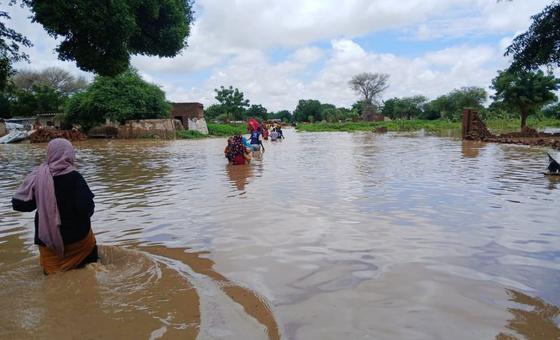
Fighting in Sudan has displaced 200,000 more people since late 2025, with seasonal floods making a dire situation even worse. Here's what's happening and why it matters.
The humanitarian situation in Sudan has hit another devastating milestone. According to the International Organization for Migration (IOM), a United Nations agency, the escalation of fighting since late 2025 has forced at least 200,000 more people to flee their homes. That's a staggering number, and it's not just about the conflict—seasonal flooding is piling on top of an already unbearable crisis.
When you hear numbers like 200,000, it's easy to lose sight of what they mean. That's roughly the population of a mid-sized American city like Syracuse, New York, or Akron, Ohio, suddenly uprooted. Families who once had routines, jobs, and a place to call home are now sleeping in makeshift shelters or out in the open, often with nothing but the clothes on their backs.
### The Conflict Behind the Numbers
The fighting that's driving this displacement isn't new, but it's intensifying. Since late 2025, clashes between rival factions have spread across key regions, hitting civilian areas particularly hard. The result? People are making impossible choices every single day: stay and risk their lives, or leave and risk everything else.
What makes this round of displacement so alarming is the speed of it. In just a few months, we're talking about a quarter of a million people. That's not a slow trickle—it's a flood of human desperation.
### Floods Making Things Worse
Here's the kicker: Sudan's rainy season has brought catastrophic flooding on top of the violence. Entire villages have been submerged. Roads are washed out, making it nearly impossible for aid trucks to reach those in need. Aid agencies are calling it a double emergency—conflict and climate colliding in the worst possible way.
To put it in perspective, some floodwaters have risen over 10 feet in low-lying areas, swallowing homes and farms alike. And with temperatures often soaring past 110 degrees Fahrenheit, the conditions for displaced families are nothing short of brutal.
### Who's Being Hit Hardest?
- **Women and children** make up the vast majority of the displaced, according to IOM field reports.
- **Elderly and disabled individuals** are often left behind because they can't move quickly enough.
- **Farmers and rural communities** are losing their livelihoods, not just their homes.
It's a grim picture, and the UN has warned that without immediate funding, the response will fall short. The agency needs hundreds of millions of dollars to provide food, clean water, and medical care—money that hasn't fully materialized.
### What Can Be Done?
Look, I'm not going to pretend there's an easy answer here. This is a complex geopolitical mess with no quick fix. But what is clear is that the international community can't just look away. Humanitarian corridors need to be opened, ceasefires need to hold, and funding needs to flow.
> "We're racing against time," said an IOM spokesperson. "Every day of delay means more lives lost to violence, disease, or the elements."
If you're reading this and wondering what you can do, the most practical step is to support reputable humanitarian organizations working on the ground. Even small donations can translate into meals, blankets, or emergency medical kits for a family that's lost everything.
### The Bigger Picture
Sudan's crisis isn't just a regional problem. Displacement on this scale has ripple effects across borders, straining neighboring countries and fueling instability. It's also a stark reminder that climate change and conflict don't exist in separate silos—they feed off each other.
For now, the focus has to be on the immediate needs of those 200,000 people and counting. They didn't choose this. They just want to go home, or at least find a safe place to start over. That's not too much to ask, is it?
As the situation evolves, we'll keep an eye on the numbers and what they mean. But behind every statistic is a human story—a mother carrying her child through floodwater, an elderly man walking miles with nothing but a walking stick. Those are the people who deserve our attention and our action.