Sudan's Hidden Crisis: Over 200,000 Displaced in Just Months
Thomas Meyer ·
Listen to this article~5 min
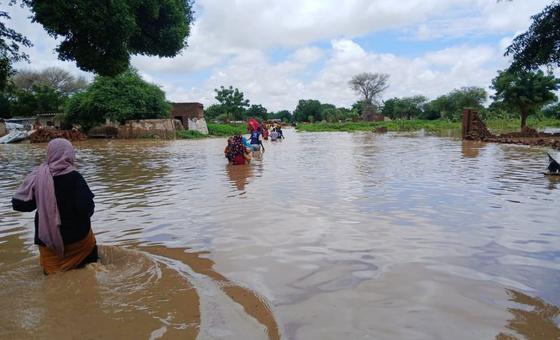
Sudan's escalating conflict and devastating floods have displaced over 200,000 people since late 2025. Here's what's happening and why it matters.
The situation in Sudan has quietly spiraled into one of the most pressing humanitarian emergencies of our time. You might have seen the headlines, but the numbers behind them are staggering. According to the United Nations' International Organization for Migration (IOM), the escalation of fighting since late 2025 has forced at least 200,000 more people to flee their homes. That's not a statistic; that's a city of people uprooted in a matter of months.
### The Escalation No One Is Talking About
When we talk about displacement, it's easy to get lost in the scale. But let's break it down. Two hundred thousand people is roughly the entire population of a mid-sized American city like Des Moines, Iowa, or Pasadena, California. Imagine every single resident of those cities packing up their lives in a matter of weeks, leaving behind everything they own, just to survive. That's the reality unfolding in Sudan right now.
The conflict, which has been simmering for years, took a sharp turn for the worse in the final months of 2025. As battles intensified, families had to make impossible choices: stay and risk everything, or leave with nothing but what they could carry. For many, the roads out of conflict zones became their only lifeline, but those roads are fraught with danger, checkpoints, and uncertainty.
### When Nature Piles On
As if the violence wasn't enough, Sudan is also grappling with devastating seasonal floods. These aren't your average rainstorms. We're talking about rivers bursting their banks, whole villages submerged, and crops destroyed. It's a cruel twist of fate that the same people fleeing bullets are now also fleeing rising waters.
> "The combination of armed conflict and severe flooding has created a perfect storm of human suffering," noted a humanitarian coordinator on the ground. "Families are being hit from two sides, and there's simply nowhere safe to go."
### The Humanitarian Toll
The numbers from the IOM tell a grim story, but they only capture part of the picture. Here's what the data often misses:
- **Access to basics:** Clean water, food, and medical care are becoming scarce luxuries. Many displaced families are surviving on less than a single meal a day.
- **Shelter crisis:** With floods destroying homes, makeshift camps are overflowing. Tents and tarps are in critically short supply.
- **Long-term trauma:** The psychological impact on children who have witnessed violence and lost their homes will last for generations.
### Why This Matters Beyond Sudan's Borders
You might be wondering why this should matter to you, thousands of miles away. The truth is, displacement on this scale doesn't stay in one place. It creates ripple effects across the entire region. Neighboring countries are struggling to absorb the influx of refugees, which puts strain on their own economies and social services.
There's also the human element. These are not just numbers on a page; they're mothers, fathers, students, and doctors. They're people who had plans and dreams, much like you and me. When we ignore crises like this, we're not just turning a blind eye to politics; we're turning our backs on our shared humanity.
### What Can Be Done
It's easy to feel helpless when facing a crisis of this magnitude, but there are meaningful ways to make a difference. Humanitarian organizations on the ground are working around the clock, but they're desperately underfunded. Donating to reputable aid groups can provide immediate relief in the form of food, clean water, and emergency shelter.
Beyond donations, raising awareness is crucial. When we talk about these issues with our friends, families, and on social media, we put pressure on governments and international bodies to take action. Silence is complicity, and in times like these, every voice matters.
### A Crisis That Needs Attention
The situation in Sudan is not a distant problem that will solve itself. It's a live, breathing emergency that demands our attention. As the conflict grinds on and the waters keep rising, the window for meaningful intervention is closing. The 200,000 people who have recently lost their homes are counting on the international community to step up. The question is: will we answer the call?