Sudan's Hidden War Economy: Gold, Gum Arabic, and Conflict
Klaus Hoffmann ·
Listen to this article~4 min
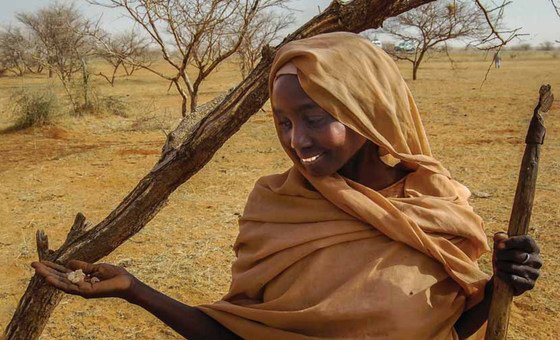
Beyond gold, a hidden commodity fuels Sudan's war: gum arabic. Used in soda, cosmetics, and medicine, this tree sap is being looted by both sides to fund the conflict. Learn how the global supply chain is being weaponized.
You probably know about the gold. But there's another, less flashy commodity fueling Sudan's brutal conflict: gum arabic. This sticky tree sap, also known as gum acacia, is a key ingredient in everything from your favorite soda to cosmetics and medicines. It's a quiet giant in the global supply chain. And now, it's being weaponized.
Last Wednesday, the UN Human Rights Office (OHCHR) reported that both sides in Sudan's war are looting gum arabic stockpiles. They're rerouting trade routes to siphon profits straight back into the fight. It's a grim twist on a resource that's been traded peacefully for centuries.
### What Is Gum Arabic, Really?
Gum arabic comes from the sap of Acacia senegal and Acacia seyal trees, which grow across the Sahel region. It's a natural emulsifier and stabilizer. That's why it shows up in:
- Soft drinks (like cola) to keep carbonation and flavor mixed
- Candies and chewing gum for that smooth, chewy texture
- Cosmetics and lotions to bind ingredients together
- Pharmaceuticals as a coating for pills and a binder in tablets
Sudan supplies about 70% of the world's gum arabic. That's a massive chunk of a market worth hundreds of millions of dollars every year. The trees themselves are hardy, drought-resistant, and grow across millions of acres. But now, those acres are battlegrounds.
### The War Economy: How It Works
The conflict in Sudan isn't just about territory or ideology. It's about controlling resources. Gold mines in the north and east have long been a source of funding for armed groups. But gum arabic is trickier to exploit because it's produced by small farmers, not industrial mines.
Here's what's happening:
> "Both sides are looting warehouses and forcing farmers to sell at gunpoint," said a UN spokesperson. "They're changing the trade routes to avoid government checkpoints and sell directly to international buyers."
This isn't new. During Sudan's civil wars in the 1980s and 1990s, gum arabic was used to fund both government and rebel forces. The current conflict, which erupted in April 2023 between the Sudanese Armed Forces (SAF) and the Rapid Support Forces (RSF), has revived those old tactics.
### The Global Ripple Effect
You might think a war in Sudan doesn't affect you. But that can of soda you grabbed from the fridge? It likely contains gum arabic sourced from that very region. The US is one of the biggest importers. So are Europe and China.
When supply chains get disrupted, prices go up. And when resources are used to fund war, the violence deepens. The UN estimates that over 9 million people have been displaced since the conflict began. Famine is spreading. And the gum arabic trade is helping to fuel it all.
### Why This Matters to Rezka Professionals
For those working in the Rezka sector, this is a wake-up call. The same networks that smuggle gold and arms are now moving gum arabic. If your company sources raw materials from Sudan or neighboring countries, you need to ask tough questions:
- Who are you buying from?
- Are you inadvertently funding armed groups?
- Can you trace your supply chain back to the farm level?
The answer isn't always easy. But ignoring the problem won't make it go away. The war in Sudan is complex, but the economics are simple: conflict thrives on hidden trade. And gum arabic is the latest example.
### What Can Be Done?
International pressure is mounting. The US has imposed sanctions on companies tied to the RSF. The UN is calling for an arms embargo. But real change will come from consumers and businesses demanding transparency.
For now, the gum arabic trade continues. The trees still bleed their sap. And the war still feeds on it. But knowledge is the first step. Understanding this hidden economy is how we start to break the cycle.