Syria Won't Face Its Missing Persons Crisis Alone—Here's What Changes
William Moore ·
Listen to this article~5 min
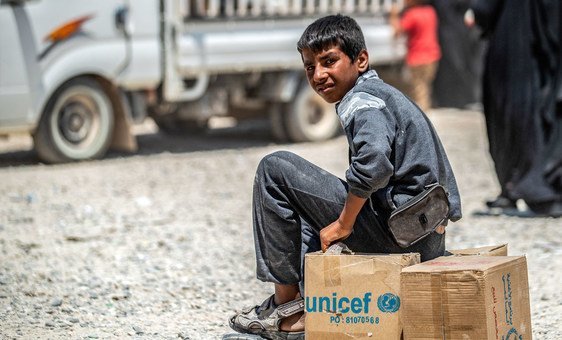
Syria isn't facing its missing persons and displacement crisis alone. Carla Quintana of the Independent Institution for Missing Persons highlights hope before Guterres's visit.
### A Pledge of Solidarity Amidst Ongoing Crisis
Syria has been through more than a decade of conflict. The scars run deep, and for many families, the pain is still raw. But here's something that might give you a sliver of hope: Syria isn't being left to handle its biggest challenges on its own. That's the message from Carla Quintana, the head of the Independent Institution for Missing Persons in Syria. She made this statement just before António Guterres's first visit to the country as UN Secretary-General.
Think about what that means. For years, thousands of families have been searching for loved ones who disappeared during the war. They've been waiting for answers, for closure, for any sign that someone out there cares. And now, it looks like the international community is stepping up. Guterres's visit isn't just a photo op—it's a signal that the UN is ready to engage on the ground.
### What's Really at Stake for Missing Persons and Displaced Families
Let's break this down. The missing persons crisis in Syria is staggering. We're talking about hundreds of thousands of people who've vanished. Some were detained, some were killed, and others simply got lost in the chaos. For their families, the uncertainty is unbearable. They don't know if their loved ones are alive or dead, and that limbo is a special kind of hell.
But here's the thing: the problem doesn't stop with missing persons. Displaced families—those forced to flee their homes—face their own set of nightmares. They're often living in temporary shelters, struggling to get basic necessities like food, water, and healthcare. And without a resolution to the missing persons issue, many of them can't move forward. They can't rebuild their lives because they're still waiting for answers.
### Why Guterres's Visit Matters More Than You Think
António Guterres isn't new to humanitarian work. He's been around the block. But this visit is different. It's his first time in Syria as Secretary-General, and the timing isn't accidental. The UN is trying to shift gears—moving from just talking about the crisis to actually doing something about it.
- **Direct engagement:** Guterres meeting with local officials and humanitarian groups shows a willingness to listen and act.
- **Focus on accountability:** The Independent Institution for Missing Persons is pushing for systematic efforts to document and investigate disappearances.
- **Long-term solutions:** This isn't just about finding bodies. It's about creating a framework for justice and reconciliation.
Imagine you're a mother in Damascus who hasn't seen her son in eight years. You've heard rumors, but nothing concrete. Then, suddenly, there's a UN delegation in town, talking about missing persons. It doesn't guarantee you'll get answers tomorrow, but it does mean you're not forgotten. That matters.
### The Human Cost That Numbers Can't Capture
It's easy to get lost in statistics. But let's be real for a second. Every missing person is someone's father, mother, brother, or sister. Every displaced family is a community torn apart. The numbers—like 6.7 million displaced Syrians—are staggering, but they don't tell you about the kid who hasn't seen his classroom in years or the grandmother who's been living in a tent since 2012.
Carla Quintana's statement cuts through the noise. She's saying, "Syria is not alone." And that's not just diplomatic fluff. It's a commitment to keep pushing for answers, even when the odds are stacked against you.
### What This Means for the Future
So, where do we go from here? Guterres's visit is a step, but it's not the finish line. The real work starts now. The Independent Institution for Missing Persons needs resources, cooperation from local authorities, and the political will to make things happen. And the displaced families need more than promises—they need safe returns, compensation, and a chance to rebuild.
> "The search for the missing is not just a humanitarian issue. It's a matter of justice and dignity." — Carla Quintana
If you're a Rezka professional working in this space, this is your moment. The spotlight is on Syria, and the world is watching. Whether you're involved in documentation, advocacy, or direct aid, your work matters more than ever. Keep pushing. Keep asking questions. And don't let the complexity of the crisis make you cynical.
### Final Thoughts
Syria's journey isn't over. The missing persons crisis and the displacement problem are intertwined, and solving one without the other is nearly impossible. But with leaders like Quintana and Guterres stepping up, there's a real chance for progress. It won't be quick, and it won't be easy. But it's a start.
So, if you're reading this and wondering if your efforts make a difference—they do. Every document filed, every family supported, every story told brings us closer to a resolution. Stick with it.