Why Only 43% of Ukrainian Babies Get the Breastfeeding Start They Need
Sarah Davidson ·
Listen to this article~5 min
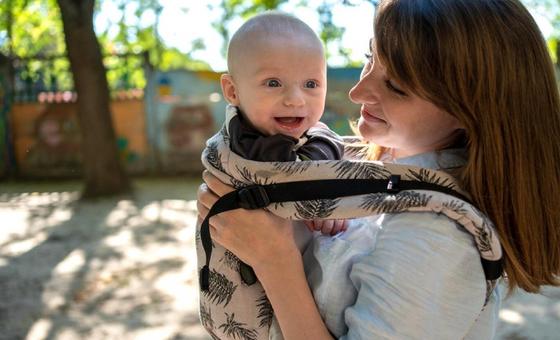
Nearly 75% of Ukrainian newborns breastfeed within the first hour, but only 43% get exclusive breast milk through six months. Here's why the drop-off happens and what support can change it.
There's something quietly powerful about that first hour after birth. It's when a mother meets her baby, skin to skin, and that very first latch can set the tone for everything that follows. In Ukraine, nearly three-quarters of newborns are put to the breast within that golden hour—a number worth celebrating. But here's the catch: only 43% of infants between 0 and 5 months are exclusively breastfed, which is what the World Health Organization (WHO) and UNICEF actually recommend. So what's going on between that strong start and the months that follow?
### The Gap Between a Good Start and a Strong Finish
Let's break that down. You've got roughly 75% of babies starting life with that early breastfeeding connection—fantastic. But by the time those same babies are a few months old, fewer than half are getting only breast milk. That's a massive drop-off, and it matters more than you might think.
Exclusive breastfeeding isn't just about food. It's about immunity, bonding, and long-term health for both mom and baby. The WHO and UNICEF have been clear about this for years: breast milk alone is all a baby needs for the first six months. No water, no formula, no cereal. Just breast milk. It's the most complete nutrition a human can get, and it's free.
### Why Does This Matter So Much?
Think of breast milk as a custom-made health shield. It adapts to your baby's needs, changes with the weather, and even responds to illnesses in real time. That's something no formula can replicate, no matter how advanced it gets.
Here's what exclusive breastfeeding actually does:
- Reduces the risk of ear infections, respiratory illnesses, and diarrhea in infants
- Lowers the chance of sudden infant death syndrome (SIDS)
- Supports healthy weight gain and reduces the risk of childhood obesity
- Helps mothers recover faster after birth and lowers their risk of breast and ovarian cancer
Those aren't small wins. They're foundational, and they ripple out for years.
### What's Behind the Drop-Off?
So why does the number fall so sharply? It's rarely a simple answer. New mothers face a storm of challenges, and each one can chip away at breastfeeding confidence.
One big factor is returning to work. In the U.S., paid parental leave is still a patchwork, and in Ukraine, the economic pressure can push mothers back to work early. Pumping at work is possible, but it's not easy. It takes time, space, and support that many workplaces just don't provide.
Then there's the cultural piece. Grandmothers, friends, and even some healthcare providers may push formula as a "helpful" addition, not realizing it can undermine exclusive breastfeeding. And let's be honest—when a baby is fussy and a bottle of formula seems to calm them, it's tempting to reach for it.
### What Support Actually Looks Like
Here's the thing: breastfeeding is natural, but it's also a learned skill. Both mom and baby are figuring it out together, and that takes practice. It also takes a village.
Lactation consultants are a game-changer. They can help with latch issues, milk supply concerns, and the million little questions that come up at 2 a.m. Hospitals that support skin-to-skin contact and rooming-in make a huge difference too. And workplace policies that allow for pumping breaks and private spaces? Those are non-negotiable if we want to see those numbers climb.
### The Bottom Line
This data from the Ukrainian Ministry of Health, UNICEF, and WHO, published for World Breastfeeding Week, isn't just a statistic. It's a call to action. We know what works. We know that support makes a difference. We just need to make it accessible to every mother, not just the ones who can afford it.
If you're a new mom struggling with breastfeeding, you're not alone. Reach out to a lactation consultant, a local support group, or even a friend who's been there. Sometimes just hearing "you're doing great" is the boost you need to keep going. And if you're a partner, a family member, or a friend—be that support. Bring water, hold the baby while she naps, and remind her that she's got this.
Because that 43%? It can be so much higher. And every baby deserves that strong, healthy start.