A Day of Escalation: The Rising Human Cost in Ukraine's Frontline Regions
Robert Moore ·
Listen to this article~4 min
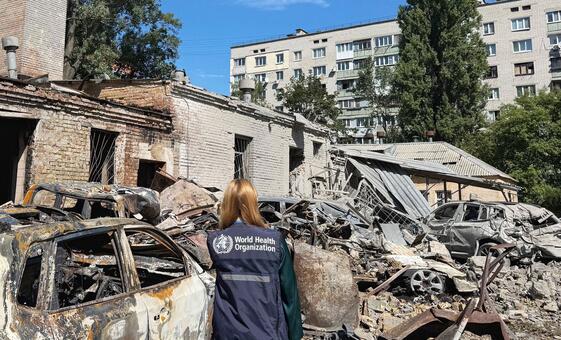
UN reports a sharp rise in civilian casualties from attacks across Ukraine, with frontline regions suffering most heavily in a devastating 24-hour period.
It was a Friday when the report landed, one of those updates you read and feel the world shift a little. The United Nations Office for the Coordination of Humanitarian Affairs (OCHA), citing Ukrainian authorities, confirmed a devastating 24-hour period. Across the country, attacks had taken the lives of at least 12 civilians, with more than 65 others wounded. The data is stark, but behind each number is a story, a family, a home that will never be the same. And as always, the communities closest to the fighting bore the heaviest burden.
You know, we talk about strategies and software all day, but moments like this remind us what's really at stake. It’s about people. The frontline regions aren't just dots on a map; they're towns and villages where daily life has become a calculation of risk. This latest escalation underscores a brutal, ongoing reality.
### Understanding the Humanitarian Impact
So, what does this mean on the ground? When we hear '12 civilians killed,' it’s easy for that to become just a statistic. But let's break that down. These are people who were in their homes, on their way to work, or trying to find supplies. The 'more than 65 wounded' represents individuals facing immediate trauma and a healthcare system stretched beyond its limits. Hospitals in these areas are operating under constant pressure, dealing with everything from shrapnel wounds to the psychological scars that will last far longer.
The concentration of suffering in the frontline zones is no accident. These areas experience the most frequent shelling, aerial bombardments, and ground clashes. Infrastructure—water, electricity, heating—is often damaged or destroyed. For the professionals and organizations trying to deliver aid, it creates an incredibly dangerous and complex environment. Every delivery convoy, every aid worker, faces immense peril.
### The Challenge of Response and Coordination
In the face of such events, the response machinery kicks into gear, but it's a race against time and danger. Organizations like OCHA work to coordinate the efforts of multiple agencies, but the challenges are monumental. Access is the biggest hurdle. Roads are mined or under fire, bridges are out, and security clearances can take precious hours that people don't have.
Here’s what aid coordination often looks like in a crisis zone:
. Rapid assessment teams try to determine the most urgent needs—medical, shelter, food.
. Evacuation corridors for the wounded must be negotiated, which is a diplomatic and logistical nightmare.
. Supplies pre-positioned in safer areas are mobilized, but getting them in requires windows of relative calm.
. Local volunteers often become the first responders, performing heroics with very little.
It’s a patchwork of bravery and desperation. And for every successful delivery, there are countless needs that go unmet simply because it’s too dangerous to reach them.
### The Long Shadow on Civilian Life
Beyond the immediate casualties, attacks like these cast a long shadow. They deepen the trauma for millions who have already endured so much. Parents are afraid to send children to school, if the school is even standing. Markets close, economies freeze, and the simple act of going outside becomes a life-or-death decision. The psychological toll is immeasurable and will require support for years to come.
As one aid worker on the ground recently noted, 'We're not just patching up wounds; we're trying to hold together the fabric of entire communities.' That’s the real, human-scale impact. It’s about preserving dignity and hope in places where both are under direct assault.
For those of us watching from afar, our role is to stay informed, to understand the human cost behind the headlines, and to support the organizations doing the hard, dangerous work on the ground. The numbers from that Friday are a grim reminder that the conflict continues to extract its highest price from those least involved in the fighting. Their safety, their futures, remain the central humanitarian crisis of this war.