A Weekend's Toll in Ukraine Reveals Deepening Humanitarian Crisis
Jennifer Miller ·
Listen to this article~4 min
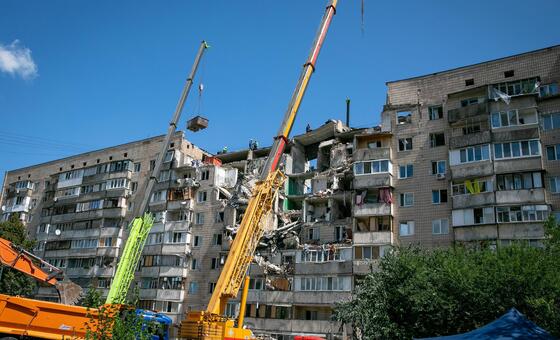
UN officials report approximately 60 civilians killed and over 240 wounded in attacks across Ukraine last weekend, highlighting a severe escalation in the humanitarian crisis.
Let's talk about what happened last weekend. The news that came out of Ukraine was, frankly, devastating. It wasn't just a headline; it was a stark reminder of the human cost that continues to mount.
You might have seen the numbers flash by. Over the course of those two days, a series of attacks across Ukraine resulted in the deaths of approximately 60 civilians. Think about that for a second—sixty people who weren't soldiers, who were just trying to live their lives. On top of that, more than 240 others were wounded. The scale is hard to comprehend.
### The Official Word from the UN
This information came directly from a source you can't really ignore: the United Nations. Stéphane Dujarric, the UN Spokesperson, laid it all out during a briefing for journalists in New York on Monday. He wasn't just sharing his opinion. His report was built on the ground-level data collected by UN humanitarian workers who are right there in Ukraine, corroborated by the Ukrainian authorities themselves. When the UN speaks with that kind of clarity, it's a sign of how serious the situation is.
### Breaking Down the Numbers
We often hear casualty figures and they can become abstract. So let's make it real. Those 60 lives lost represent families shattered, communities grieving. The hundreds wounded—many of them severely—face long, painful roads to recovery, assuming they have access to the medical care they desperately need right now. The impact ripples out far beyond the initial blast.
- **Civilians in the Crossfire:** The key detail here is that these were civilian casualties. These attacks struck at the heart of everyday life.
- **Widespread Impact:** The phrase 'across Ukraine' tells us this wasn't an isolated incident in one town. It was a wave of violence affecting multiple regions.
- **The Role of Aid Workers:** The fact that UN humanitarian staff provided the data highlights the incredible risks these individuals take to document the truth and coordinate help.
### Why This Matters Beyond the Headlines
Okay, so we've got the tragic facts. But what does it mean for the bigger picture? Well, it signals a deepening of the humanitarian emergency. Infrastructure like hospitals, power grids, and water systems—already strained—takes another hit with every attack. This makes the work of aid organizations exponentially harder. They're not just delivering food and blankets anymore; they're dealing with mass casualty events.
It also puts immense pressure on the global community. Calls for ceasefires and diplomatic solutions grow louder, but the situation on the ground, as this weekend showed, remains incredibly volatile and dangerous for ordinary people. There's a quote that comes to mind here, from a relief worker I once spoke to: 'In a conflict, the first casualty is truth, but the lasting ones are always the innocent.' That feels painfully relevant.
### The Path Forward
So where do we go from here? First, acknowledging the human toll is crucial. These aren't statistics; they're people. Second, supporting verified humanitarian efforts becomes more important than ever. Third, and perhaps most difficult, is maintaining a focus on the pursuit of a sustainable peace, even when the news cycles move on. The needs on the ground—for safety, for medical care, for basic necessities—don't disappear when the weekend ends. They become the new, heartbreaking normal for millions. The international response, both in aid and diplomacy, will be tested by weekends like this last one, where the line between military engagement and humanitarian catastrophe becomes terrifyingly thin.