Inside the UN's 30-Year Fight Against Gender-Based Violence
Amanda Williams ·
Listen to this article~4 min
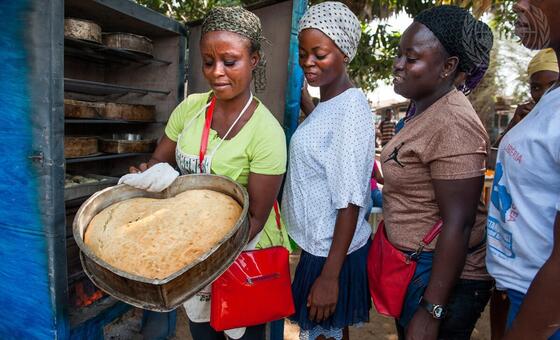
For 30 years, a unique UN fund has solely fought violence against women & girls, mobilizing over $250 million for 700+ global initiatives. Its focused mission has driven grassroots change worldwide.
Let's talk about something that doesn't get nearly enough airtime. Thirty years ago, something pretty groundbreaking happened at the United Nations. The General Assembly created a fund—the first and still the only one in the entire UN system—with a single, laser-focused mission: to eliminate violence against women and girls.
Think about that for a second. In a vast bureaucracy known for sprawling mandates, they carved out a dedicated space for this one critical issue. That was a statement in itself. It said, 'This matters enough to stand alone.'
### The Scale of the Commitment
So, what's happened in those three decades? The numbers tell part of the story, and they're staggering. We're talking about a mobilization of over $250 million. That's a quarter of a billion dollars channeled directly into this fight. But money is just a tool. The real impact is in the action.
That funding has supported more than 700 initiatives across the globe. From local grassroots programs to national policy reforms, this fund has been the quiet engine in the background, empowering the people on the front lines. It's not about a top-down, one-size-fits-all approach. It's about finding what works in a specific community and fueling it.
### Beyond the Numbers: The Human Impact
Now, statistics can feel cold. It's easy to glaze over when you hear '700 initiatives.' But let's make it real. Each one of those initiatives represents a story. It could be a shelter that opened its doors in a city where none existed before. It might be a legal aid clinic helping women navigate complex systems to find justice. Or it could be an education campaign in a village, challenging deep-seated norms and starting a new conversation.
The fund's role is often that of a catalyst. It provides the initial spark, the crucial seed funding, that allows local experts—who understand their own contexts best—to build something sustainable. As one long-time advocate once put it, 'This isn't about saving anyone. It's about providing the resources so communities can save themselves.'
### The Evolving Challenge
You might wonder, after 30 years and all this effort, is the problem getting any better? That's the hard part. Awareness is undoubtedly higher. More countries have laws on the books. But the prevalence remains a global crisis. In many ways, the work has gotten more complex. It's not just about responding to violence anymore; it's about preventing it. That means tackling the root causes:
- **Harmful social norms** that perpetuate inequality
- **Economic disempowerment** that traps women in dangerous situations
- **Weak legal systems** that fail to protect or deliver justice
- **The alarming rise of online violence** as a new frontier of abuse
### Looking Ahead: The Next 30 Years
So where do we go from here? The fund's legacy isn't just in the projects it completed. Its true legacy is in proving that a dedicated, persistent focus on this issue is not only necessary but possible. It created a blueprint.
The next phase will demand even more. It will require smarter partnerships, a deeper integration of technology for good, and a relentless commitment to listening to survivors and centering their experiences in every solution. The goal isn't just to manage the problem but to end it. That's a long game if there ever was one.
Reflecting on these three decades, it's clear this was never a quick fix. It's been a long, often difficult, march of incremental progress. But sometimes, creating that single, dedicated space for a problem is the most powerful first step you can take. The rest of the journey follows from there.