UN Aid Reaches Besieged Palestinian Families in Qusra
Eleanor Vance ·
Listen to this article~4 min
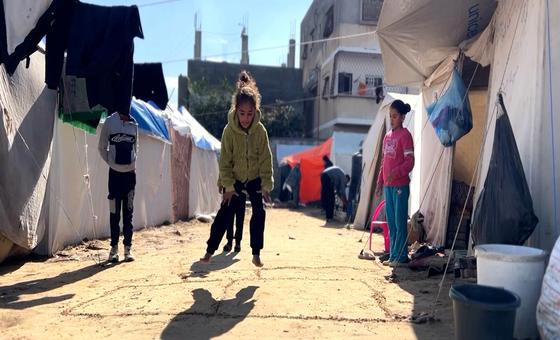
UN humanitarian workers reached the besieged village of Qusra near Nablus, delivering essential supplies to three Palestinian families trapped by an Israeli outpost.
Sometimes, the most basic deliveries become the most powerful statements. That's exactly what happened in the small West Bank village of Qusra, located just south of Nablus, when humanitarian workers from United Nations agencies finally managed to get through.
For weeks, three Palestinian families had been completely cut off. Their homes were surrounded by Israeli military forces and settlers, making it nearly impossible for anyone to come or go. The siege didn't start over some dramatic clash or headline-grabbing incident. It began quietly, with the establishment of an Israeli outpost right next to their homes.
### A Village Under Pressure
Qusra isn't a big place. It's a tight-knit community where everyone knows everyone, and the land has been farmed for generations. When that outpost went up, life changed overnight for the families living closest to it. Suddenly, routine movements—going to work, taking kids to school, even buying groceries—became logistical nightmares.
The UN teams that finally reached the village didn't arrive with grand solutions or political statements. They came with the essentials: food, water, medicine, and other basic supplies that most of us take for granted. For the families trapped in that situation, those supplies weren't just packages. They were proof that the outside world hadn't forgotten them.
### Why This Delivery Matters
Here's the thing about sieges like this one—they're not just about physical restrictions. They're about isolation, about eroding a community's ability to function normally. When you can't reliably get food or medical care, every single day becomes a survival exercise.
The UN workers who made it to Qusra had to navigate a complex web of checkpoints, roadblocks, and security concerns. It wasn't a simple errand. It took coordination, patience, and a willingness to push through bureaucratic hurdles that could easily have delayed the mission indefinitely.
For the families on the ground, this delivery means more than just a full pantry. It's a reminder that humanitarian principles still matter, even in places where conflict has made everyday life incredibly difficult.
### The Bigger Picture
This situation in Qusra is a microcosm of a larger reality across the West Bank. Communities find themselves caught between military operations, settlement expansion, and the daily grind of living under occupation. Each siege, each restriction, chips away at the social fabric that holds these villages together.
International law is pretty clear on this: civilians must have access to humanitarian aid, and parties to a conflict have obligations to facilitate that access. But legal frameworks don't always translate into on-the-ground reality. That's why missions like this one remain so critical.
### What Happens Next
For now, the immediate needs of those three families have been addressed. But the underlying issue—the outpost that triggered the siege in the first place—remains unresolved. Without a broader political solution, similar situations could easily arise elsewhere.
The UN's work in places like Qusra is a reminder that humanitarian action isn't always about grand gestures. Sometimes it's about showing up with the basics, navigating the obstacles, and making sure that no family has to face the world alone.
As the situation develops, the hope is that access to Qusra becomes routine rather than exceptional. Because every family deserves the simple dignity of being able to feed their children, see a doctor, and live without the constant threat of being cut off from the rest of the world.