UN Aid Reaches Palestinian Families Trapped by Israeli Outpost
Sarah Jenkins ·
Listen to this article~5 min
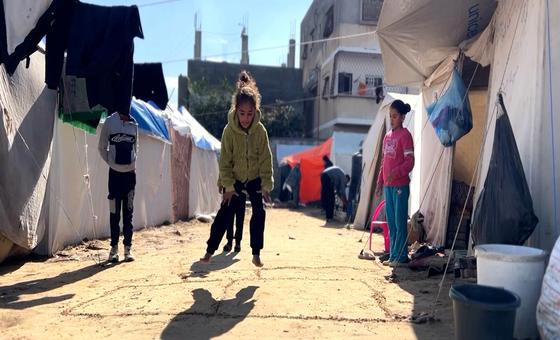
UN humanitarian workers reached the besieged village of Qusra, delivering essential supplies to three Palestinian families trapped by an Israeli outpost near their homes.
It's the kind of story that doesn't always make the front pages, but it's one that matters deeply to the people living through it. Humanitarian workers from United Nations agencies finally managed to reach the small village of Qusra, just south of Nablus on the West Bank. For weeks, three Palestinian families have been effectively boxed in, surrounded by Israeli military forces and settlers. The siege didn't come out of nowhere—it started after an Israeli outpost was established right next to their homes.
When aid convoys get through, it's never just about the boxes they carry. It's about a lifeline. It's about reminding people that the world hasn't forgotten them, even when their daily reality is defined by checkpoints, restrictions, and the constant hum of tension. Let's break down what happened, why it matters, and what it tells us about the broader situation on the ground.
### What Exactly Happened in Qusra?
Qusra is a farming community that sits in a volatile part of the northern West Bank. The families in question have been under a tight cordon, with movement in and out severely limited. UN staff, who have been trying to negotiate access for days, finally got the green light to deliver essential supplies. We're talking about the basics: food, water, and medical items. Nothing glamorous, but absolutely critical for survival.
The trigger for the siege was the establishment of an Israeli outpost near the family homes. Outposts are unauthorized settlements under Israeli law, though they're often tolerated and sometimes even supported by the government. For the families in Qusra, the arrival of the outpost meant a sudden and dramatic shift in their daily lives. What was once a quiet rural area became a flashpoint.
### Why Is This Access So Significant?
Getting aid into a besieged area is never a simple task. It requires coordination, negotiation, and often a fair amount of patience. The UN workers who made it to Qusra had to navigate a complex web of military checkpoints and security protocols. Their success is a small but meaningful victory for humanitarian access.
Here's why this matters beyond the immediate delivery:
- **It sets a precedent:** When aid gets through once, it becomes harder for authorities to deny access in the future.
- **It provides a window into the situation:** UN staff can now report on the conditions on the ground with firsthand knowledge.
- **It offers psychological relief:** For the families, seeing international workers arrive is a powerful signal that they haven't been abandoned.
### The Bigger Picture: Settlements and Sieges
This isn't an isolated incident. Across the West Bank, Palestinian communities are increasingly facing pressure from settlement expansion. Outposts like the one near Qusra often lead to violence, land confiscation, and restricted movement. The result is a slow, grinding process that makes daily life nearly impossible.
The UN has repeatedly called for an end to settlement expansion, pointing out that it undermines the possibility of a two-state solution. But on the ground, the reality is that these outposts keep appearing, and communities keep paying the price. For the families in Qusra, the siege is just the latest chapter in a long story of displacement and uncertainty.
### What Happens Next?
The immediate crisis may be eased, but the underlying issues remain unresolved. The families in Qusra are still living next to an outpost, still facing the threat of violence, and still dependent on external aid for their most basic needs. The UN has said it will continue to push for sustained access and for the protection of civilians under international law.
For now, the delivery of supplies is a reminder that even in the most difficult circumstances, human dignity matters. It's a small crack in the wall of isolation, but it's a crack nonetheless. And sometimes, that's enough to keep hope alive.
If you're following the situation in the West Bank, this is a story worth watching. It's not just about one village or three families—it's about the broader pattern of how conflict shapes lives in ways that are often invisible from afar.