Why UN Aid Workers Finally Reached This Sealed West Bank Village
William Moore ·
Listen to this article~5 min
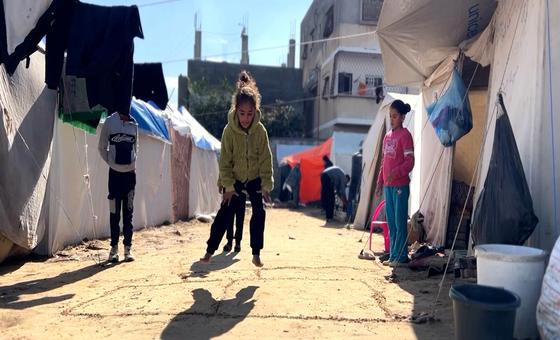
UN aid workers broke through a military cordon to deliver essentials to three Palestinian families trapped in Qusra, a West Bank village besieged after an Israeli outpost appeared next to their homes.
When a village gets cut off from the outside world, the simplest things—food, water, medicine—become lifelines. That's exactly what happened in the small Palestinian community of Qusra, south of Nablus in the West Bank, where three families have been trapped for weeks under an Israeli military and settler cordon. The siege began quietly, almost without notice, after an Israeli outpost was established right next to their homes. Now, UN humanitarian teams have finally pushed through to deliver essentials. But the bigger question remains: how did it get to this point, and what happens next?
### The Siege Nobody Talked About
Qusra isn't a name that makes global headlines. It's a modest farming village of roughly 2,500 residents, known for its olive groves and stone houses clinging to the hillsides. But for the three families living closest to the new outpost, daily life has become a standoff. Israeli forces and settlers have blocked roads, restricted movement, and cut off access to basic supplies. Reports suggest the families are surviving on whatever they had stocked before the blockade tightened.
Here's what the situation looks like on the ground:
- **No free movement:** Roads in and out of the area are either closed or heavily guarded.
- **Limited supplies:** Food, water, and medical essentials have run dangerously low.
- **Constant pressure:** Settlers and military presence create an intimidating environment around the clock.
- **No end in sight:** The outpost remains, and there's no clear timeline for its removal.
### What the UN Delivery Actually Means
Getting humanitarian workers into Qusra wasn't a simple task. It took coordination, negotiation, and a fair amount of patience. When the UN team finally arrived, they brought what the families needed most—food parcels, clean water, hygiene kits, and basic medical supplies. For the people inside, this wasn't just a delivery. It was proof that the outside world hadn't forgotten them.
But let's be clear: a single aid run doesn't solve a siege. It's a Band-Aid on a wound that keeps reopening. The families still can't leave freely. Children still can't get to school without fear. Farmers still can't tend their olive trees, which for many here are the difference between income and destitution.
### The Outpost Problem
The root of this crisis is the outpost itself. In the West Bank, outposts are unauthorized settlements, often built on private Palestinian land. Under international law, they're considered illegal. But that hasn't stopped their proliferation. When an outpost goes up, it usually brings infrastructure, roads, and a permanent security presence. For nearby Palestinian communities, that often means land loss, restricted access, and escalating tension.
In Qusra, the outpost sits uncomfortably close to the families' homes. The proximity isn't just symbolic—it's practical. It means settlers and soldiers are within shouting distance. It means every trip to the market or the clinic becomes a negotiation. And it means the families live in a state of constant alert, never knowing when the next restriction will come.
### What's Being Done About It
Humanitarian agencies are doing what they can, but they're operating within limits. They can deliver aid, document conditions, and advocate for access. What they can't do is remove the outpost or end the siege. That requires political will, diplomatic pressure, and a broader resolution to the conflict—none of which are quick or easy.
For now, the UN's reach into Qusra is a small victory. It shows that even in the most locked-down areas, there are still channels for help. But it also highlights how fragile life is for communities caught in the crossfire of a decades-long dispute.
### Why This Matters Beyond Qusra
This isn't just a story about one village. It's a pattern repeating across the West Bank, where outposts and checkpoints fracture communities and make daily life a struggle. Each new settlement expansion chips away at the possibility of a two-state solution, and each siege erodes trust in any future peace.
For the families in Qusra, the immediate concern is survival. For the rest of us, it's paying attention. Because when we stop noticing these quiet crises, they don't go away—they just get worse.
The aid delivery is a start, but it's not an ending. The real work lies in addressing the causes, not just the symptoms. Until that happens, villages like Qusra will keep depending on emergency runs, and families will keep waiting for a normal life that seems just out of reach.