The UN's Ukraine Mission Just Revealed How Drones Are Rewriting Modern Warfare
Evelyn Reed ·
Listen to this article~4 min
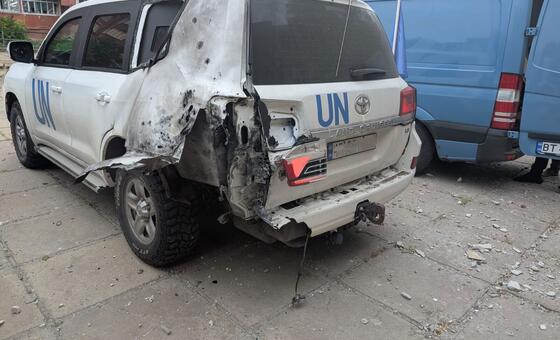
UN relief chief Tom Fletcher just returned from Kherson with a stark warning: drones are now reshaping how wars are fought, and civilians are paying the price. Here's why this matters.
When Tom Fletcher wrapped up his latest trip to Ukraine, he didn't just file a routine report. The UN's emergency relief coordinator and deputy secretary-general had spent two days in Kherson, and what he saw there is forcing the international community to rethink everything we thought we knew about how wars are fought.
Fletcher addressed journalists via video link from the UN headquarters in New York, and his message was stark. He called Kherson one of the "epicenters" of drone use against civilian areas. That's not a phrase you hear every day, and it deserves a closer look.
### What's Actually Happening in Kherson
Kherson isn't just another city on a map. It's a frontline town that has been battered for months. What Fletcher observed on the ground was something more systematic than random attacks. It was a pattern of drone warfare aimed directly at neighborhoods, infrastructure, and everyday people going about their lives.
The implications here are massive. If drones are now being used as a primary weapon against civilians, the old rules of engagement—and the old ways of protecting people—might not cut it anymore.
### Why This Changes the Game
Think about what a drone costs versus what it can do. A relatively inexpensive drone can disable a power substation or terrorize an entire residential block. That's an asymmetry that favors the attacker, and it's a nightmare for defenders.
Here's what stood out from Fletcher's briefing:
- **Scale**: This isn't a few scattered incidents. It's a sustained, coordinated campaign.
- **Targeting**: Civilian areas are being hit, not just military positions.
- **Adaptation**: Both sides are learning and evolving their tactics in real time.
- **Human cost**: Behind every report is a family, a home, a life disrupted.
Fletcher's choice of words matters. When a senior UN official uses a term like "epicenter," they're signaling that this isn't a side issue. It's central to how the conflict is unfolding.
### The Broader Picture for the United States
You might be wondering why this matters to someone in the U.S. It matters because the technology and tactics being tested in Ukraine don't stay in Ukraine. They get studied, copied, and refined. What works there will likely show up in other conflicts, and that has direct implications for how the U.S. military prepares for the future.
It also matters for humanitarian planning. If drones can shut down a city's water supply or make hospitals unreachable, relief efforts need a whole new playbook. Fletcher's visit was partly about assessing those needs, and his comments suggest the challenges are growing.
### What Comes Next
The UN is calling for more attention to civilian protection, but words alone won't stop a drone. What will? Better air defense systems, more resilient infrastructure, and a serious conversation about the ethics of autonomous weapons.
For now, Fletcher's message is a warning shot. The character of war is changing, and the international community is still catching up. If we don't pay attention to what's happening in places like Kherson, we'll be unprepared for what comes next.
This isn't just about one city or one conflict. It's about the future of how conflicts are fought—and who gets caught in the middle.