UN Official Warns Drone Warfare Is Redefining Conflict in Ukraine
David Brown ·
Listen to this article~4 min
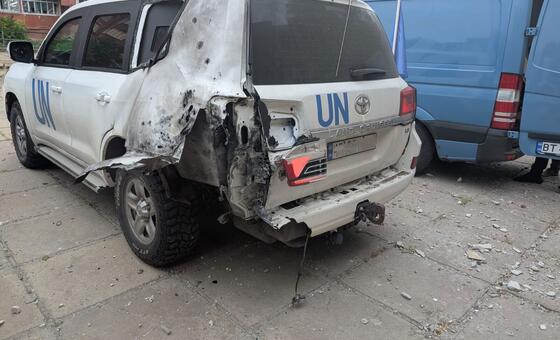
UN relief chief Tom Fletcher just returned from Kherson, Ukraine, with a stark warning: drones are fundamentally changing how wars are fought. Here's what he saw and why it matters globally.
When Tom Fletcher, the UN's emergency relief coordinator, wrapped up his latest trip to Ukraine, he didn't deliver a routine diplomatic statement. Instead, he painted a stark picture of how modern warfare has shifted under our feet.
Fletcher spent two days in Kherson, a city he described as one of the "epicenters" of drone attacks targeting civilian areas. Speaking to journalists via video link from UN headquarters in New York, he made it clear that these aren't just military tools anymore—they're reshaping the very nature of conflict.
### What Fletcher Saw in Kherson
Kherson has become a grim testing ground for drone warfare. Fletcher's firsthand account isn't just another briefing; it's a window into how everyday life has been upended. He noted that drones are no longer limited to reconnaissance or frontline strikes.
- They're being used to target residential neighborhoods
- Civilian infrastructure is taking direct hits
- The psychological toll on residents is immense
This isn't a distant, abstract problem. For the people of Kherson, the buzz of a drone overhead can mean the difference between a normal day and a life-altering tragedy.
### Why This Matters Beyond Ukraine
Here's the thing: what's happening in Ukraine isn't isolated. Fletcher's comments carry weight because they signal a broader shift in how wars will be fought in the future. If drones can be deployed this effectively against civilians in Kherson, the same tactics could appear anywhere.
The UN's role in documenting these patterns isn't just about accountability. It's about understanding the new rules of engagement. And right now, those rules are being written in real time, often in the skies above Ukrainian cities.
### The Human Cost of Drone Warfare
Let's be honest—statistics and strategy talk can obscure what really matters. Behind every report of a drone strike is a family, a neighborhood, a community trying to survive.
Fletcher's visit wasn't a photo op. He was there to assess humanitarian needs, to see the damage with his own eyes. His description of Kherson as an "epicenter" isn't hyperbole; it's a sobering reality check.
Residents face daily uncertainty. Schools, hospitals, and homes have all been affected. The international community's response, or lack thereof, will have consequences that last long after the fighting stops.
### What Comes Next
The UN's humanitarian coordination efforts are ongoing, but Fletcher's message is clear: the world needs to pay attention. Drone warfare isn't a futuristic concept anymore. It's happening now, and it's changing the calculus for everyone involved.
For policymakers, this means revisiting defense strategies. For humanitarian organizations, it means preparing for new types of crises. And for the rest of us, it's a reminder that the nature of conflict is always evolving, often faster than our ability to respond.
Fletcher's trip may be over, but the questions it raises are just beginning. How do you protect civilians in a war where the enemy can strike from above without warning? How do you negotiate peace when the battlefield extends into living rooms?
These aren't easy questions. But ignoring them won't make them go away. As Fletcher's visit shows, the answers will shape not just Ukraine's future, but the future of conflict worldwide.