UN Official Warns Drones Are Reshaping the War in Ukraine
Emily Williams ·
Listen to this article~5 min
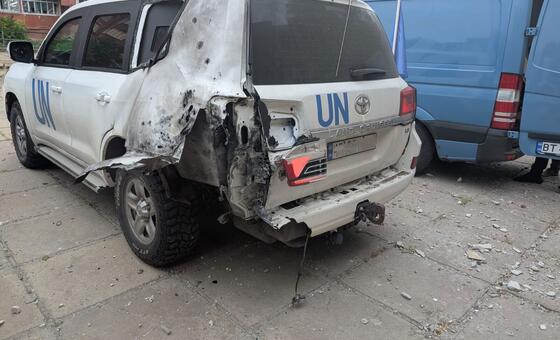
UN relief chief Tom Fletcher says drones are changing how wars are fought after visiting Kherson, calling it an epicenter of drone attacks on civilians.
When Tom Fletcher, the UN's emergency relief coordinator, wrapped up his latest trip to Ukraine, he didn't just file a routine report. Instead, he gave the world a stark look at how modern warfare is evolving right before our eyes. After spending two days in Kherson, a city that has become a flashpoint for drone attacks, Fletcher told reporters in a video call from UN headquarters in New York that these unmanned aircraft are fundamentally changing the nature of conflict.
It's not the kind of news that makes headlines for long, but it's the kind that should make us all pause. Because when a senior UN official uses the word "epicenter" to describe a civilian area under drone assault, you know we're not talking about a minor shift in tactics. We're talking about a seismic change in how wars are fought and, more importantly, who gets hurt.
### What Fletcher Saw in Kherson
Fletcher didn't mince words when describing his time on the ground. He called Kherson one of the "epicenters" of drone use against civilian neighborhoods. That's a heavy statement, and it carries a lot of weight coming from someone who has seen crisis zones across the globe.
Think about what that means for a moment. Drones aren't just flying over battlefields anymore. They're hovering over homes, schools, and hospitals. They're turning everyday spaces into danger zones. And the people living there? They're the ones paying the price for this shift in warfare.
The UN official's observations align with what we've seen in countless reports over the past few years. Drones have become cheaper, more accessible, and more deadly. They've also become harder to defend against, especially for civilians who have no warning and no place to hide.
### Why Drones Change Everything
Here's what makes drones so different from traditional weapons. They're small, fast, and often silent until it's too late. A fighter jet you can hear coming. A missile you might get a warning about. But a drone? It can appear out of nowhere, strike, and be gone before anyone knows what hit them.
This isn't just a tactical observation. It's a humanitarian one. When drones are used against civilian areas, they create a constant state of fear. You never know when one might strike. You never know if that buzzing sound overhead is just a bird or something far more sinister.
Fletcher's comments highlight a broader trend that military analysts have been tracking for years. The cost of entry for drone warfare has dropped dramatically. You don't need a massive defense budget to launch devastating attacks anymore. That means more actors, both state and non-state, can use this technology.
### The Human Toll of Drone Warfare
It's easy to get caught up in the technology and strategy. But let's not forget the human side of this story. The people of Kherson have been living under this threat for months. They've seen their neighborhoods turned into testing grounds for new weapons. They've lost loved ones, homes, and their sense of security.
Here's what that looks like in practical terms:
- Families can't let their children play outside without constant supervision.
- Ambulances and first responders have to navigate streets that could be targeted at any moment.
- Basic services, like water and electricity, become even more fragile when drones can strike infrastructure.
That's not just a military problem. That's a humanitarian crisis in real time.
### What the UN Is Doing About It
Fletcher didn't just come back with warnings. He came back with a renewed commitment to address the situation. The UN has been working to document these attacks and push for better protection of civilians. But as he noted, the challenges are immense.
International law has rules about how wars should be fought. But drones have outpaced those rules. We're in a gray area where the technology is ahead of the regulations. That's a dangerous place to be, especially for civilians caught in the middle.
The UN's role here is crucial. By shining a spotlight on what's happening in places like Kherson, they're trying to build international pressure to hold those responsible accountable. Whether that's enough remains to be seen.
### A Wake-Up Call for the World
If there's one takeaway from Fletcher's trip, it's this: the nature of war is changing, and we need to pay attention. Drones are not a futuristic concept anymore. They're here, they're being used, and they're leaving a devastating mark on civilian populations.
We don't have all the answers. But acknowledging the problem is the first step toward solving it. And when a UN official who has seen it firsthand speaks out, it's worth listening.
The situation in Ukraine is complex, and the use of drones adds another layer of unpredictability. But one thing is clear: the world can't afford to look away. Because what happens in Kherson today could set a precedent for conflicts everywhere tomorrow.