UN Official Warns Drones Are Rewriting the Rules of War in Ukraine
Jessica Miller ·
Listen to this article~4 min
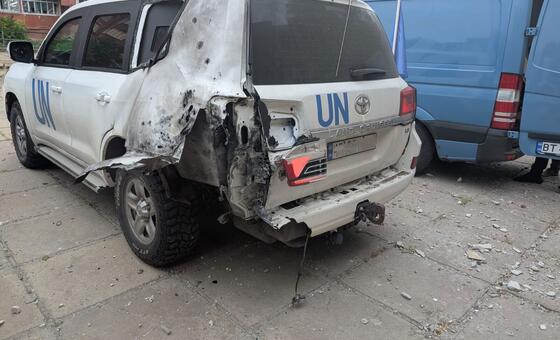
UN relief chief Tom Fletcher warns that drones are turning cities like Kherson into "epicenters" of civilian-targeted warfare, changing the very nature of modern conflict.
When Tom Fletcher, the UN's emergency relief coordinator, wrapped up his latest trip to Ukraine, he didn't just file a routine report. He came back with a stark warning that's been turning heads at the UN headquarters in New York.
Speaking to journalists via video link, Fletcher described the southern city of Kherson as one of the "epicenters" of drone warfare against civilian areas. That's not a phrase you hear every day, and it hits hard.
### What Fletcher Saw in Kherson
Fletcher spent two days on the ground in Kherson, and the picture he painted is grim. He didn't mince words about what drones are doing to everyday life there.
- Drones are now used to target residential neighborhoods, not just military positions.
- Civilians face a constant, invisible threat from the sky, making daily routines like grocery shopping or walking to work an act of courage.
- The psychological toll is just as heavy as the physical damage. People are living under a cloud of anxiety that never lifts.
This isn't the distant, high-tech warfare you see in movies. It's personal, it's close, and it's reshaping what conflict means in the 21st century.
### Why Drones Change Everything
Think about it this way: a drone is cheap, silent, and can be operated from miles away. It doesn't need a pilot sitting in a cockpit or a massive supply chain to keep it flying. That's a game-changer.
Traditional warfare relies on heavy artillery, tanks, and jets. Drones flip that model on its head. They bring the battlefield to the doorstep of ordinary people, and they do it without warning.
Fletcher's comments echo what many military analysts have been saying for years: drones are leveling the playing field. But in places like Kherson, that "leveling" means civilians pay the price.
### The Human Cost of Drone Warfare
Here's the thing that gets lost in the headlines: behind every report of a drone strike, there's a family. There's a mother who can't sleep because she's listening for the buzz of an engine. There's a child who's learned to flinch at the sound of the wind.
Fletcher didn't share specific casualty numbers, but he didn't need to. The message was clear: this is a humanitarian crisis that's only getting worse.
The UN has been calling for the protection of civilians in conflict zones for decades. But drones make that protection nearly impossible. How do you defend against something you can't see coming?
### What This Means for the Future
If you're wondering whether this is just a Ukraine problem, think again. Drones are already being used in conflicts across the globe, from the Middle East to Africa. The tactics being tested in Kherson today could become the standard elsewhere tomorrow.
That's why Fletcher's warning matters beyond the immediate crisis. It's a wake-up call for the international community to rethink how we approach modern warfare.
> "The nature of war is changing, and we need to change with it," Fletcher's remarks seemed to imply. "We can't keep applying old rules to a new reality."
### A Call for Action
So, what happens next? For now, the UN is focused on getting aid to the people who need it most in Kherson and other affected areas. But the bigger question remains: how do we prevent drones from turning every city into a war zone?
That's a conversation that needs to happen at the highest levels of government. And it needs to happen soon.
For the people of Kherson, though, the immediate priority is survival. They don't have the luxury of debating policy. They're just trying to get through the day without hearing that dreaded hum overhead.
Fletcher's trip was short, but his message will linger. Drones are here to stay, and the way we respond to them will define the future of conflict. Let's hope we're listening while there's still time.