UN Official's Ukraine Trip Reveals How Drones Are Redefining Modern Warfare
Dr. Eleanor Vance ·
Listen to this article~5 min
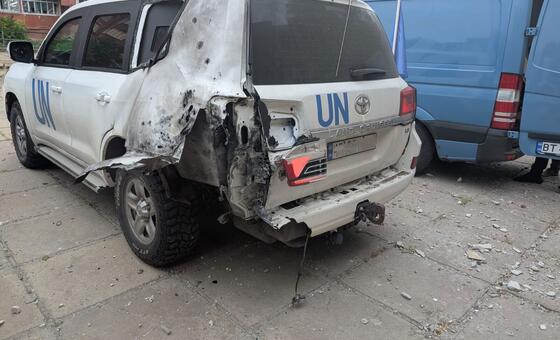
UN relief chief Tom Fletcher just wrapped up a visit to Ukraine with a stark warning: drones are transforming warfare. His report from Kherson reveals a troubling new reality for civilians caught in the crossfire.
When Tom Fletcher, the UN's emergency relief coordinator, wrapped up his latest visit to Ukraine, he didn't just file a routine report. Instead, he dropped a sobering observation that's turning heads in military and humanitarian circles alike: drones are fundamentally changing the way war is fought.
Speaking to journalists via video link from the UN headquarters in New York, Fletcher described his final two days on the ground in Kherson. He called the southern Ukrainian city one of the "epicenters" of drone strikes targeting civilian areas. That's not just a tactical footnote—it's a warning about what modern conflict looks like when the sky itself becomes a weapon.
### What Fletcher Saw in Kherson
Kherson has been a flashpoint since the early days of the invasion. But according to Fletcher, the nature of the threat there has shifted dramatically. It's no longer just about artillery shells or ground troops. Now, small, relatively cheap drones are being used with alarming precision against neighborhoods, schools, and infrastructure that civilians rely on every day.
He didn't mince words about the impact. These aren't military targets in the traditional sense. They're homes, hospitals, and marketplaces. The psychological toll is just as heavy as the physical damage, because you never know when a buzzing sound overhead might be the last thing you hear.
### Why Drones Change Everything
Here's the thing about drones: they've made the battlefield personal in a way we haven't seen before. A drone operator could be miles away, sitting in a command center, but the effect is felt right on someone's doorstep. That creates a strange, unsettling dynamic where war feels both distant and uncomfortably close at the same time.
There's also the cost factor. A single drone can cost a few thousand dollars, but the damage it can inflict—both physically and psychologically—can be enormous. That's a trade-off that makes drones incredibly attractive to militaries, and incredibly dangerous for civilians caught in the crossfire.
### The Humanitarian Angle
For someone like Fletcher, whose job is to coordinate emergency aid, drones present a unique challenge. How do you get food and medical supplies to people when the roads are watched by flying machines that can strike at any moment? It slows everything down, makes every delivery a calculated risk, and puts aid workers in harm's way.
He stressed that the international community needs to wake up to this new reality. The rules of engagement, the laws of war, and the way we protect civilians all need to be rethought when the threat isn't just coming from the ground but from the air above.
### What This Means for the Rest of Us
You might be thinking, "Okay, that's a war zone, what does it have to do with me?" But here's the uncomfortable truth: the technology that's being tested in Ukraine doesn't stay in Ukraine. Drones are becoming cheaper, more accessible, and more sophisticated every year. The tactics being refined there will likely show up in other conflicts, and even in domestic security situations, sooner than we'd like.
Fletcher's comments should serve as a wake-up call. We're not just watching a regional conflict unfold; we're witnessing the evolution of warfare itself. And if we don't pay attention, we might find ourselves unprepared for a world where the sky is no longer a safe place.
### A Call for Clearer Rules
One of the key takeaways from his briefing is the urgent need for clearer international guidelines on drone use. Right now, the legal framework is lagging behind the technology. That gap creates a gray area where civilian casualties can be dismissed as collateral damage, and where accountability becomes murky at best.
Fletcher didn't offer easy answers, but he made it clear that ignoring the problem won't make it go away. The UN and its member states need to grapple with these questions now, before the next conflict makes the answers even harder to find.
In the end, his message was simple but profound: the character of war is changing, and we need to change with it. The drones that are reshaping Kherson today could be over any city tomorrow. Are we ready for that? Based on Fletcher's report, the honest answer is probably not yet.