UN Official's Ukraine Trip Reveals How Drones Are Rewriting War
Lisa Bakker ·
Listen to this article~4 min
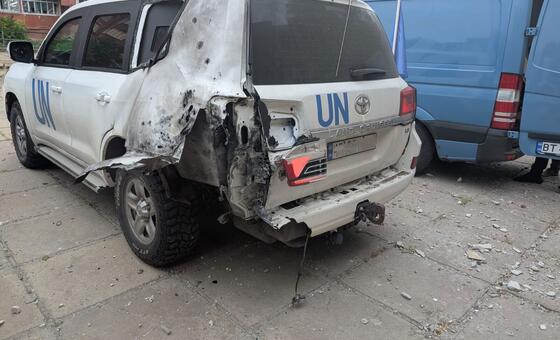
UN emergency relief coordinator Tom Fletcher visited Kherson and called it an "epicenter" of drone strikes on civilians. His warning: drones are fundamentally changing the character of war, and the world must adapt.
When Tom Fletcher, the UN's emergency relief coordinator and deputy secretary-general, wrapped up his latest trip to Ukraine, he didn't just deliver a routine briefing. He came back with a stark observation that's been buzzing through diplomatic circles: drones are fundamentally changing how war is fought.
Fletcher spent the last two days in Kherson, a city he described as one of the "epicenters" of drone strikes targeting civilian areas. Speaking to journalists via video link from UN headquarters in New York, he didn't sugarcoat what he saw.
### What Makes Kherson a Living Laboratory for Drone Warfare
Kherson isn't just another frontline city. It's become a grim testing ground for how unmanned aerial vehicles are reshaping conflict. And here's the thing—this isn't about military targets on a distant battlefield. These drones are hitting neighborhoods, schools, and the places where ordinary people live their daily lives.
Fletcher's choice of the word "epicenter" is telling. It suggests something seismic, a shift that's not just happening in one spot but radiating outward. The implications stretch far beyond Ukraine's borders.
### Why This Matters Beyond the Battlefield
You might be thinking, "Okay, drones in war—we've heard this before." But here's what's different: the scale and the precision of targeting civilian infrastructure. This isn't a side note in a conflict report. It's a central feature of how modern warfare is being waged.
For humanitarian workers like Fletcher, this creates a whole new set of challenges. When drones can strike anywhere at any time, delivering aid becomes a high-stakes game of timing and luck. Shelters that were once considered safe may no longer be. Evacuation routes that worked last month might be drone alleyways today.
### The Human Cost You Don't See in Headlines
Behind the strategic analysis, there are real people making impossible choices. Families in Kherson are learning to read the sky, distinguishing between the hum of a delivery drone and the buzz of something far more sinister. It's a psychological toll that doesn't show up in casualty figures.
Fletcher's visit wasn't just about observation. It was about understanding how the international community needs to adapt its response. Because when the nature of war changes, the nature of humanitarian aid must change too.
### What This Means for the Future of Conflict
Here's the uncomfortable truth: the tactics being refined in Kherson today could appear in conflicts tomorrow, anywhere in the world. The lessons learned about drone defense, civilian protection, and emergency response are being written in real time, in a city that's become an unwilling pioneer.
- Drones are lowering the barrier to aerial attacks, making them accessible to more actors
- Civilian areas are increasingly becoming targets, not just collateral damage
- Humanitarian responses must now account for a 24/7 aerial threat
- Early warning systems are being tested and improved under fire
### A Call for Renewed Focus
Fletcher's message to the world is clear: we can't afford to look away. The way drones are being used against civilians in Kherson is a warning sign, not just for Ukraine but for global security. When he says the character of war is changing, he's not being dramatic—he's being accurate.
The international community has a choice. It can treat this as another chapter in a long-running conflict, or it can recognize that what's happening in Kherson is a preview of what's to come. For the people living through it, the latter interpretation isn't academic. It's survival.
As Fletcher's briefing concluded, one thing was unmistakable: the ground beneath modern warfare is shifting, and drones are doing much of the digging. The question isn't whether this changes conflict—it already has. The real question is whether the rest of the world is ready to respond.