The Human Toll: UN Report Details Civilian Casualties Across Ukraine
James Davis ·
Listen to this article~5 min
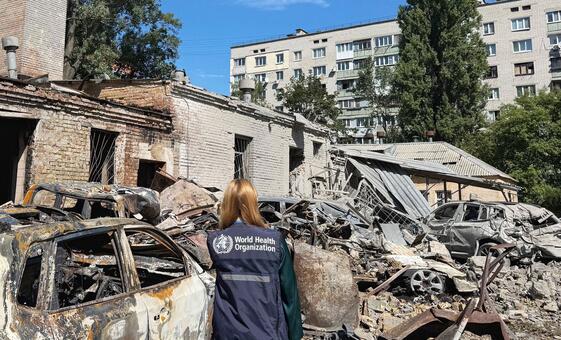
A UN report details a devastating 24 hours in Ukraine, with at least 12 civilians killed and over 65 wounded in widespread attacks, highlighting the severe impact on frontline communities.
It's a sobering reality that hits you square in the gut. The latest report from the UN's Office for the Coordination of Humanitarian Affairs (OCHA), based on information from Ukrainian authorities, paints a picture of a harrowing 24-hour period. We're not talking abstract figures here. We're talking about people – neighbors, families, individuals whose lives were violently interrupted. The numbers speak volumes, but the stories behind them are what truly resonate.
### The Staggering Numbers from a Single Day
Let's break it down, because sometimes the sheer scale can be hard to process. In just one day, the attacks across Ukraine resulted in at least 12 civilians killed. Let that sink in. Twelve lives, gone. Beyond that, more than 65 others were wounded. That's over 75 people directly impacted by violence in a single rotation of the earth. It's a stark reminder that while the headlines may fade, the conflict's brutal impact on everyday people does not.
- **Lives Lost:** 12 civilian fatalities confirmed.
- **Injured:** 65+ civilians wounded, many critically.
- **Scope:** Attacks reported across multiple regions nationwide.
These aren't just statistics on a page. They represent parents, children, workers, and community members. They're the folks who were simply trying to live their lives amidst a storm they didn't ask for.
### Frontline Regions Bearing the Brunt
The report makes a crucial point that often gets lost in broader discussions. While violence spread across the country, the areas near the active front lines were hit especially hard. These regions, already strained by proximity to constant conflict, absorbed a disproportionate share of the suffering. It's a tragic pattern – the communities closest to the fighting endure the most relentless pressure, with infrastructure, homes, and lives consistently on the line.
Think about what that means for daily existence. For people in these frontline zones, there's no such thing as a normal day. The sound of air raid sirens isn't an anomaly; it's a grim routine. Planning for the future feels like a luxury. The OCHA report underscores this by highlighting their acute vulnerability. When attacks intensify, these regions have nowhere to hide, no safe distance to retreat to. They are, quite literally, on the front lines of a humanitarian crisis.
### The Role of UN Humanitarian Coordination
So, where does this information come from, and why does it matter? The UN's OCHA isn't just a passive observer. They serve as the central nervous system for the global humanitarian response. Their job is to coordinate aid, assess needs, and, critically, to bear witness. By compiling and verifying data from local authorities – in this case, Ukraine's official sources – they create an authoritative record.
This documentation is vital for several reasons. First, it cuts through misinformation and provides a clear, factual baseline. Second, it informs where emergency aid like medical supplies, food, and shelter should be prioritized. Finally, and perhaps most importantly, it affirms the reality of civilian suffering. It says, 'This happened. These people mattered.' In a world of competing narratives, that act of witnessing carries immense weight.
As one aid worker on the ground recently noted, *"Our data isn't just numbers. It's a map of human pain, and a guide for where compassion needs to go next."*
### Moving Beyond the Headlines
Reading a report like this, it's easy to feel a sense of helplessness. The numbers are big, the situation is complex, and it's unfolding thousands of miles away. But understanding is the first step. When we engage with the human cost, not just the strategic maneuvers, we start to see the conflict for what it truly is: a profound human tragedy.
The true value of a report like the UN OCHA's latest update isn't in shocking us. It's in connecting us. It reminds us that behind every geopolitical analysis, there are individuals paying the ultimate price. It challenges us to look past the maps and missile symbols on the news and see the communities shattered, the families torn apart, and the sheer resilience required to endure another day. That's the story the numbers tell – a story of loss, of resilience, and of an urgent, ongoing need for peace and protection for civilians caught in the crossfire.