UN Report Reveals a Grim New Record in Ukraine's Civilian Toll
William Smith ·
Listen to this article~5 min
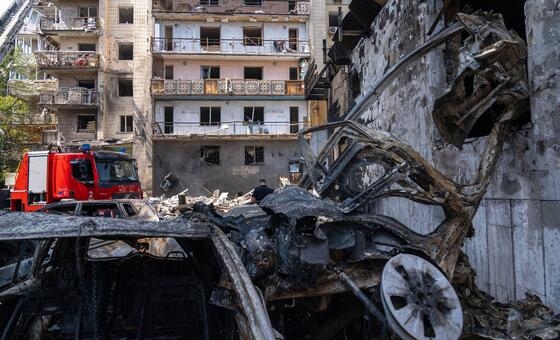
A new UN report reveals that July 2026 saw the highest number of civilian casualties in Ukraine since March 2022, marking a grim escalation in the conflict's human toll.
The numbers are stark, and they demand our attention. In July 2026, the United Nations Human Rights Monitoring Mission in Ukraine released data that should stop us all in our tracks: the number of civilians killed and injured that month was the highest recorded since March 2022. That's a staggering statement, and it signals a worrying trend that we can't afford to ignore.
We're not just talking about statistics on a page. We're talking about real people—families, neighbors, and children—whose lives have been irrevocably changed. The UN report, issued on a Thursday, paints a sobering picture of the conflict's relentless toll. It's a reminder that the human cost of war isn't just a number; it's a collection of individual tragedies that add up to a collective scar.
### What the Data Actually Tells Us
The UN's Monitoring Mission has been tracking civilian casualties meticulously since the start of the full-scale invasion in February 2022. Their methodology is rigorous, relying on verified reports and cross-checked sources. When they say July had the highest casualty count in over four years, it's not an exaggeration or a political statement—it's a documented fact.
A few key takeaways stand out:
- The increase wasn't a marginal bump; it was a significant leap that broke a long-standing pattern.
- The majority of casualties were attributed to explosive weapons with wide-area effects, which are notoriously indiscriminate.
- Residential areas and civilian infrastructure continue to bear the brunt of the violence, making everyday life a dangerous gamble.
This data isn't just a historical record. It's a warning bell that the situation on the ground is deteriorating, not stabilizing.
### Why This Month Was Different
You might be wondering what changed in July to cause such a spike. While the report doesn't single out one specific event, the evidence points to an intensification of hostilities in densely populated areas. When fighting moves closer to cities, the risk to non-combatants skyrockets. It's a grim math: more explosions in more crowded places equals more casualties.
There's also a troubling element of disregard for the rules of war. International humanitarian law is clear—civilians must be protected, and attacks must distinguish between military targets and the general public. When that line is blurred, the consequences are devastating, as these numbers so tragically illustrate.
### The Human Cost Behind the Numbers
It's easy to get lost in the aggregates, but let's remember what a single casualty means. It's a parent who won't come home. It's a child who's lost a limb. It's a community that's lost its sense of safety. The UN's report is a stark reminder that behind every data point is a life that has been shattered.
For the international community, this should be a call to action. We can't look away and pretend this is just another headline. The fact that July 2026 broke a four-year record is a clear signal that efforts to protect civilians are falling short.
### What This Means Going Forward
As we absorb this news, it's important to think about what comes next. The UN's findings are a tool for accountability. They provide a factual basis for demanding that all parties to the conflict uphold their legal obligations. They also serve as a reminder that the world's attention must not waver.
We should also be thinking about the long-term impact. Survivors of such violence often carry physical and psychological wounds for years, if not decades. The rebuilding of communities, both in terms of infrastructure and social fabric, will be a monumental task. This isn't just about ending the fighting; it's about healing the deep scars left behind.
### A Call for Continued Vigilance
So, what do we do with this information? We talk about it. We share it. We hold our leaders accountable for their responses. The UN's monitoring mission provides an essential service by documenting these truths, and it's our responsibility to ensure that their work doesn't go unnoticed.
The record set in July 2026 isn't one we should aspire to break. It's a record that should spur us to demand better—better protection for civilians, better adherence to international law, and a better path toward a peaceful resolution. The cost of inaction is simply too high.