The UN Report Revealing a Critical Crisis in Refugee Education
Jessica Smith ·
Listen to this article~4 min
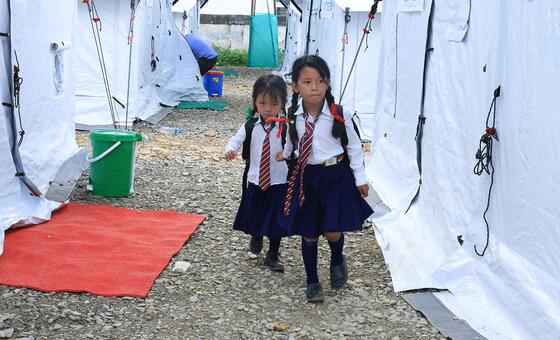
A UN report reveals nearly 5.8 million refugee children were out of school in 2025. Global funding cuts threaten to deprive millions more of an education, risking years of progress.
A recent report from the UN has dropped a sobering figure on our desks. We're talking about millions of children whose futures are hanging in the balance. It's not an easy topic, but it's one we can't afford to look away from, especially when it involves the most vulnerable among us.
Let's break this down over a virtual coffee. Picture this: a number so large it's hard to grasp. Nearly 5.8 million kids who've fled their homes due to conflict or disaster now face another barrier. They can't go to school. That's more than the entire population of cities like Atlanta or Miami just... missing out on an education. It's a quiet crisis with a deafening impact.
### What the UNHCR Report Actually Says
The UN Refugee Agency (UNHCR) released this data, and frankly, it should stop us in our tracks. The report states that in 2025, these children—refugees living in camps, settlements, or host communities around the world—are not in any formal learning environment. We're not talking about a temporary hiccup. This is a systemic failure on a global scale.
Think about what that means for a child. First, they lose their home, their community, and often family members. Then, the one thing that could provide normalcy, structure, and hope—a classroom—is out of reach. It’s a double trauma. The data points to a perfect storm: overcrowded facilities, lack of trained teachers, and most critically, a severe shortage of funding. It's a recipe for a lost generation.
### The Funding Crisis Behind the Headlines
Here’s the kicker, and it’s what makes this situation so urgent. The report directly links this educational gap to global cuts in humanitarian aid. It’s not just about these 5.8 million kids today. The funding shortfall threatens to pull the rug out from under millions more, potentially wiping out years of slow, hard-won progress. We’re at a tipping point.
Let me put it this way: investing in education for refugee children isn't just charity. It's the smartest investment in global stability and future economic potential we can make. When you educate a child, you don't just change their life. You change the trajectory of their community. You build future doctors, engineers, teachers, and leaders who can rebuild their nations. Cut that funding, and you're essentially guaranteeing deeper cycles of poverty and instability. It’s a short-sighted move with long-term, devastating consequences.
### Why This Matters for Everyone
You might wonder why this should matter to you if you're thousands of miles away. Well, in our interconnected world, instability doesn't stay contained. The skills gap, economic strain, and social challenges created today will shape the global landscape of tomorrow. Ensuring these children get an education is a foundational piece of creating a more peaceful, prosperous world for everyone.
It’s easy to feel overwhelmed by a number like 5.8 million. But progress starts with awareness. It starts with conversations like this one, recognizing the scale of the challenge, and understanding the very tangible cause—funding cuts—that’s driving it. The report isn't just a collection of statistics; it's a call to action. It’s a reminder that behind every data point is a child with dreams, just like any other, waiting for a chance.