UN Report Reveals July's Civilian Toll Hit a Grim Three-Year High
Robert Taylor ·
Listen to this article~5 min
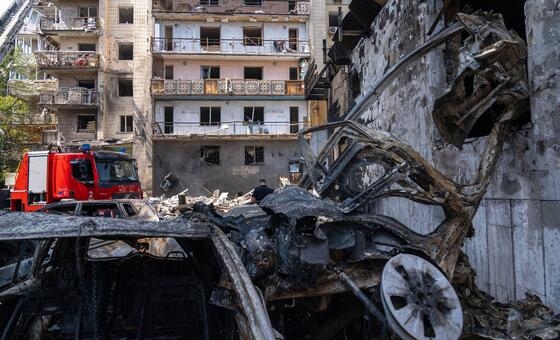
UN report reveals July 2026 saw the highest civilian casualties in Ukraine since March 2022, marking a grim reversal of a fragile trend toward stability.
The numbers are stark, and they demand our attention. In July 2026, the United Nations Human Rights Monitoring Mission in Ukraine reported that the number of civilians killed and injured reached its highest monthly total since March 2022. That's a jaw-dropping milestone, and it tells us something important about where things stand right now.
When you look at the raw data, the trend is unmistakable. The war has taken a brutal turn, and the people caught in the middle are paying the heaviest price. This isn't just about statistics or political talking points. Behind every number is a real person with a name, a family, and a life that's been shattered. It's a sobering reminder that the human cost of conflict doesn't fade with time. It can, in fact, grow worse.
### What the UN Monitoring Mission Actually Found
The UN's Human Rights Monitoring Mission in Ukraine (HRMMU) has been tracking civilian casualties since the start of the full-scale invasion. Their latest report, released on a Thursday, confirmed that July 2026 saw the highest number of civilian deaths and injuries in any single month over the past four years. To put that in perspective, you have to look back to the spring of 2022, when the war was in its most chaotic and violent phase.
Here are a few key takeaways from the report:
- **Civilian deaths and injuries spiked dramatically** compared to the previous months of 2026.
- **The increase is attributed to intensified shelling and aerial strikes** in densely populated areas.
- **The mission warns that the actual figures could be even higher**, as many cases remain unverified due to ongoing hostilities.
It's a grim reminder that the front lines aren't just military zones. They're neighborhoods, schools, hospitals, and parks. When fighting intensifies, it's the ordinary folks who have nowhere to run who suffer the most.
### Why This Trend Is So Concerning
You might be wondering why this particular month stands out so much. After all, the war has been going on for years, and we've seen countless reports of suffering. The reason July 2026 is different is that it marks a regression. For several months prior, the casualty numbers had been slowly declining, giving some hope that the situation might be stabilizing. July smashed that fragile trend.
It's like watching a patient in recovery suddenly take a turn for the worse. The progress isn't just stalled; it's reversed. The UN mission didn't sugarcoat it. They called the situation "deeply alarming" and stressed that international law protecting civilians is being disregarded with impunity. When the rules of war are ignored, everyone loses.
### The Human Impact Beyond the Numbers
Let's step back from the data for a second and think about what this really means. A high civilian casualty count isn't just a number on a chart. It represents shattered families, orphaned children, and communities that will take generations to rebuild. It also puts a massive strain on the country's healthcare system, which is already stretched thin after years of conflict.
I've spoken to aid workers who operate in the region, and they all say the same thing: the psychological toll is immeasurable. People are living in constant fear, never knowing when the next strike might hit. That kind of chronic stress doesn't just go away when the fighting stops. It lingers, affecting every aspect of daily life.
### What Can Be Done About It
The UN mission's report isn't just a documentation of failures. It's also a call to action. They're urging all parties to respect international humanitarian law, which mandates the protection of civilians. They're also calling for greater access to humanitarian aid, so that the injured can get the care they need and the displaced can find safe shelter.
For the international community, this is a moment to step up. Diplomatic pressure, sanctions, and support for accountability mechanisms can all play a role. But words aren't enough. What's needed is a sustained, coordinated effort to de-escalate the violence and protect those who have no part in the fighting.
### The Bottom Line
This report is a wake-up call. The fact that civilian casualties hit a four-year high in July 2026 should alarm anyone who cares about human rights and global stability. It's a clear sign that the situation on the ground is not improving. If anything, it's getting more dangerous for the people who just want to live their lives in peace.
We'll keep watching the data and the stories that come out of the region. In the meantime, it's worth reflecting on the fact that behind every statistic, there's a human tragedy. And that's something we can't afford to ignore.