The UN's Warning About Millions of Refugee Children Missing School
Sarah Atkinson ·
Listen to this article~4 min
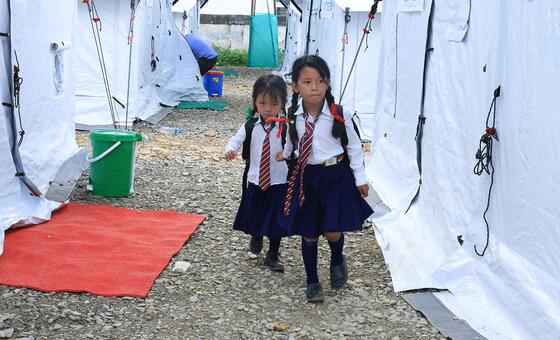
A new UN report reveals nearly 6 million refugee children were out of school in 2025, with global funding cuts threatening to deprive millions more of an education and reverse years of hard-won progress.
You know, sometimes a number hits you differently. The UN Refugee Agency just dropped a bombshell report, and the figure that stuck with me was this: nearly six million refugee children worldwide didn't attend school in 2025. Let that sink in. Six million kids whose lives have already been uprooted, now facing another fundamental loss—the chance to learn. It’s a quiet crisis, unfolding while most of the world isn't looking.
It’s not just about today’s empty classrooms. The report, released this past Friday, paints a concerning picture of what’s to come. Global funding cuts are threatening to push millions more children out of the education system entirely. We’re talking about erasing years, maybe decades, of hard-won progress in the blink of an eye. The ripple effects of that? They’ll be felt for generations.
### The Real Cost of Losing a Classroom
When we think of refugee needs, our minds often go to the immediate basics: food, shelter, safety. And those are absolutely critical. But education? It’s the foundation for everything that comes after. It’s the tool that helps rebuild a sense of normalcy, provides a safe space for healing, and most importantly, equips a child with the skills to shape their own future. Taking that away doesn't just pause a life—it can derail it.
Imagine being a kid who’s already lost your home, your community, maybe even family members. School can be the one stable anchor in a sea of chaos. It’s more than math and reading. It’s routine. It’s friendship. It’s hope. Without it, the risks skyrocket. We’re talking about increased vulnerability to exploitation, child labor, and early marriage for girls. The data is painfully clear on this.
### How Funding Cuts Create a Downward Spiral
Here’s where it gets really worrying. The UNHCR report directly links this educational crisis to shrinking budgets. It’s a vicious cycle. Less funding means:
- Overcrowded classrooms where individual attention is impossible
- A severe shortage of trained teachers willing to work in challenging conditions
- A lack of basic supplies like textbooks, notebooks, and even desks
- No resources for critical support like language classes or psychosocial care for traumatized children
When the basics aren't covered, enrollment drops. Attendance falters. And once a child is out of the system for a year or two, the chances of them ever returning diminish dramatically. We risk creating a lost generation.
As one aid worker on the ground put it, "We're not just cutting budgets, we're cutting lifelines. Every dollar pulled from education programs is a door slammed shut on a child's potential."
### What Happens When Progress Reverses?
This isn't starting from zero. For years, dedicated organizations and host countries made incredible strides in getting refugee kids into schools. Enrollment rates were slowly climbing. New programs were bridging gaps. The momentum was real.
Now? That momentum is stalling, and the report warns we’re on the brink of a backslide. Reversing progress in humanitarian work is devastating. It means all that effort, funding, and hope was for a temporary fix. It demoralizes the workers on the front lines and, worst of all, it teaches the most vulnerable children that the world’s promises are empty.
The goal was never just to get kids into a classroom for a day. It was to provide a consistent, quality education that could be a ladder out of poverty and displacement. These funding cuts don't just trim a spreadsheet line—they snap that ladder in half.
So, what now? Awareness is the first step. These aren't abstract numbers. They're children. The next step is understanding that investment in their education isn't charity; it's one of the smartest, most stabilizing investments the global community can make. It builds safer, more prosperous communities for everyone. Ignoring this crisis won't make it go away. It just ensures the problem—and its consequences—grows larger and more complex, waiting for us all down the road.