UN Report Exposes Myanmar Military's Brutal Attacks on Civilians
William Harrison ·
Listen to this article~4 min
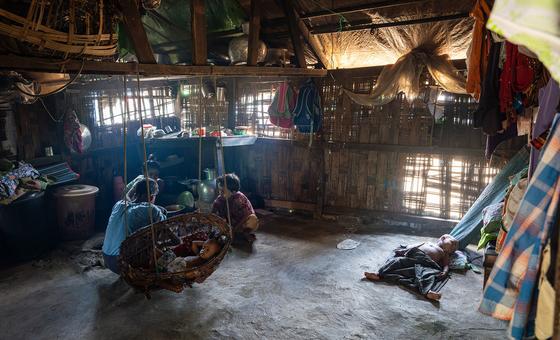
A new UN report reveals Myanmar's military is deliberately attacking civilians with airstrikes, detentions, torture, and sexual violence. Here's what the investigation uncovered and why it demands global attention.
The situation in Myanmar has taken yet another devastating turn, and the latest findings from the United Nations are nothing short of alarming. The country's military forces are not just engaged in a conflict—they're actively and deliberately targeting innocent civilians. That's not an opinion; it's the conclusion of an official investigation, and the details are hard to stomach.
### What the UN Investigation Found
The Independent Investigative Mechanism for Myanmar (IIMM) has released its annual report, and the evidence paints a grim picture. According to the investigators, the military has been conducting airstrikes on residential neighborhoods, schools, and camps that house internally displaced people. We're not talking about collateral damage or accidental strikes. The report explicitly states these attacks are intentional and systematic.
But the violence doesn't stop at the bombs. The UN report also documents a disturbing pattern of arbitrary detentions, torture, and sexual violence used as tools of war. These aren't isolated incidents either—they're part of a broader strategy designed to terrorize entire communities into submission.
### Why This Matters Beyond Myanmar's Borders
You might be wondering why this should matter to you if you're sitting in the United States, thousands of miles away. Here's the thing: when a government gets away with targeting its own people, it sets a dangerous precedent on the global stage. The IIMM was created specifically to collect evidence and build cases for future prosecution, so accountability isn't just a concept—it's a process that's already underway.
- Airstrikes on civilian infrastructure have displaced over 2.6 million people inside Myanmar
- Schools and hospitals have been hit repeatedly, denying basic services to entire regions
- Survivors of sexual violence face stigma and little to no access to proper medical care
- Arbitrary detentions have swept up journalists, activists, and ordinary citizens alike
### The Human Cost Behind the Statistics
Behind every number in that report is a real person whose life has been upended. Imagine being a parent who can't send their kids to school because the building was bombed yesterday. Or a family who fled their home with nothing but the clothes on their backs, only to be attacked again in a camp that was supposed to be a safe haven. That's the reality for millions of people in Myanmar right now.
The psychological toll is just as severe as the physical damage. Children who have witnessed violence, women who have survived assault, and men who have been tortured in detention—they all carry wounds that won't heal easily. The international community has a moral obligation to respond, not just with statements of concern, but with concrete action.
### What Comes Next
The IIMM report isn't just a documentation exercise. It's a legal foundation. The evidence collected can be used in international courts to hold perpetrators accountable, even if they never face justice in Myanmar itself. That's a slow process, no doubt, but it's a critical one.
There's also a push for stronger sanctions and targeted measures against those responsible. The hope is that by increasing the cost of these atrocities, the military will eventually be forced to change course. Whether that works remains to be seen, but it's the best tool the international community has right now.
### A Call for Continued Attention
It's easy to feel overwhelmed by global crises, but turning away doesn't make the problem disappear. The people of Myanmar need the world to keep watching, keep documenting, and keep pushing for justice. The UN's findings are a reminder that even in the darkest moments, there are mechanisms trying to shine a light on the truth.
As the report circulates and governments respond, the key is to ensure this doesn't become just another news cycle that fades into the background. Sustained pressure from the international community, including the United States, could make a real difference. For now, the evidence is clear, and the world has a choice: act or look away.