UN Reports July's Civilian Toll in Ukraine Hit a Grim New Peak
James Taylor ·
Listen to this article~6 min
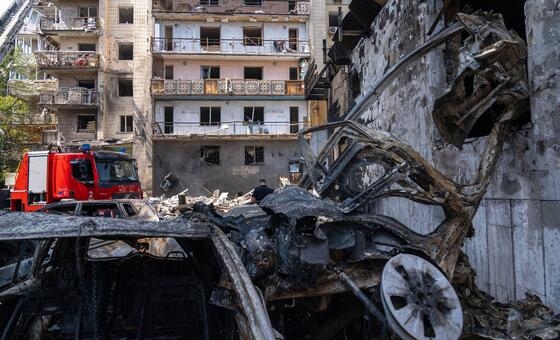
UN monitors report July 2026 saw the highest civilian casualties in Ukraine since March 2022. Here's what the data means and why it should worry us all.
The numbers are stark, and they demand our attention. In July 2026, the United Nations Human Rights Monitoring Mission in Ukraine released data that stopped many of us in our tracks. The number of civilians killed and wounded during that single month was the highest recorded since March 2022. That's not just a statistic; it's a sobering reminder of the relentless human cost that continues to unfold.
When we talk about conflict, it's easy to get lost in the geopolitical chess moves, the military strategies, and the political rhetoric. But behind every figure in a UN report is a person—a mother, a father, a child, a neighbor. This isn't abstract. It's about real lives disrupted, families shattered, and communities torn apart. The fact that July's numbers eclipsed everything we've seen since the early days of the full-scale invasion tells us something important: the situation on the ground is not improving; in many ways, it's intensifying.
### What the Latest Monitoring Data Actually Shows
The UN Human Rights Monitoring Mission (HRMMU) doesn't just pull numbers out of thin air. They have teams on the ground, documenting incidents, cross-referencing sources, and verifying reports with painstaking care. Their methodology is designed to be conservative. They only count cases they can confirm, which means the real number of casualties is likely higher than what's officially reported. So when they say July was the deadliest month since March 2022, we should listen closely.
What's particularly troubling is the pattern. The spike isn't just a one-off event. It reflects a broader trend of escalating violence in populated areas. We're seeing more attacks hitting homes, schools, hospitals, and critical infrastructure. Civilians aren't just caught in the crossfire; they're increasingly becoming direct targets. This isn't just a violation of human rights; it's a violation of every rule of war we've collectively agreed upon.
### Why This Month Was Different
You might be wondering, "What made July so uniquely deadly?" It's a fair question, and the answer is complex. Several factors seem to have converged. First, there's the issue of weaponry. The types of munitions being used in densely populated urban areas have a wide blast radius and are notoriously difficult to aim with precision. When these hit, the devastation is catastrophic.
Second, there's the simple math of attrition. As the conflict grinds on, the front lines shift, and new areas become exposed. People who thought they were safe suddenly find themselves in harm's way. The displacement crisis doesn't help either. When people are forced to move, they often end up in unfamiliar places without proper shelter or access to early warning systems.
Third, we can't ignore the psychological dimension. After more than four years of this, the constant threat of danger can lead to a kind of fatigue that makes people less cautious. It's a tragic irony: the longer the war goes on, the more desensitized we become, and the more dangerous the environment gets.
### The Human Impact Beyond the Numbers
Let's take a moment to think about what a casualty figure really means. For every person killed, there's a family that will never be the same. There are children who will grow up without a parent. There are parents who will have to bury a child—a pain that no one should ever have to endure. The wounded, too, face a long road ahead. Recovering from physical injuries is one thing; healing from the trauma is another battle entirely.
Here's what often gets overlooked: the ripple effect on mental health. The constant stress, the sleepless nights, the anxiety that comes with every air raid siren—it all takes a toll. Even those who escape physical harm are carrying invisible scars. And when the casualty numbers go up, so does the collective trauma. It's a cycle that's incredibly hard to break.
### What the International Community Can Do
It's easy to feel helpless when faced with such overwhelming numbers. But we're not powerless. There are concrete steps that can be taken to mitigate the suffering:
- **Demand Accountability**: Pressure governments and international bodies to thoroughly investigate violations of international humanitarian law.
- **Support Humanitarian Aid**: Organizations on the ground need funding to provide food, shelter, medical care, and psychological support to those affected.
- **Advocate for Protection**: Push for stronger mechanisms to protect civilians, including safe corridors and better early warning systems.
- **Keep the Story Alive**: Don't let the world look away. The more attention this gets, the harder it is for the violence to continue unchecked.
### A Call for Reflection
As we digest these latest figures, it's worth pausing to reflect on our shared humanity. The conflict in Ukraine isn't just a European problem; it's a global one. It tests the very principles we claim to stand for—human dignity, the rule of law, and the sanctity of life. The UN's report is more than just a data point; it's a wake-up call. We can't afford to become numb to this. We have to keep caring, keep paying attention, and keep pushing for a future where July's grim record is never repeated.