UN Reports July's Civilian Toll Hit a Grim New High in Ukraine
Jessica Albright ·
Listen to this article~5 min
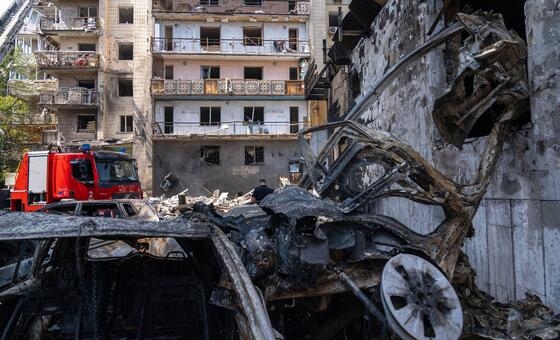
UN reports July 2026 saw the highest civilian casualties in Ukraine since March 2022, signaling a grim escalation in the conflict's human toll.
The numbers are staggering, and they're getting harder to ignore. In July 2026, the United Nations Human Rights Monitoring Mission in Ukraine released data showing that the number of civilians killed or wounded that month was the highest since March 2022. That's a sobering milestone, and it tells us something important about where this conflict is heading.
When we talk about casualty figures, it's easy to get lost in the scale. But behind every number is a person—someone's parent, child, neighbor, or friend. The UN mission's report isn't just a statistic sheet; it's a reminder of the human cost that continues to mount as the war grinds on.
### What the UN Report Actually Says
The Monitoring Mission, which has been tracking civilian harm since the invasion began, confirmed that July's toll exceeded every other month over the past four-plus years. That includes the brutal early weeks of the war in 2022, when cities like Mariupol and Bucha became synonymous with devastation.
To put this in perspective, think about what that means. We're not talking about a spike that's slightly above average. We're talking about the worst month for civilians since the conflict's most chaotic phase. That's a red flag for anyone watching the humanitarian situation closely.
### Why Is July So Deadly?
Several factors likely contributed to this tragic increase. For one, the nature of the fighting has shifted. Urban areas are seeing more intense shelling, and residential neighborhoods are increasingly caught in the crossfire. When battles move into populated zones, the risk to ordinary people skyrockets.
There's also the issue of weaponry. The use of explosive weapons with wide-area effects—like artillery, rockets, and air-dropped bombs—makes it nearly impossible to distinguish between military targets and civilian homes. In dense cities, a single strike can level an entire block, leaving families with nowhere to turn.
Another factor is the lack of safe corridors. When people try to flee, they often face dangerous routes with little protection. The UN has repeatedly called for ceasefires to allow evacuations, but those calls have largely gone unheeded.
### The Bigger Picture: A Four-Year Toll
Since March 2022, the UN has documented tens of thousands of civilian casualties. While the exact numbers are hard to verify independently, the trends are clear. The conflict has not only persisted but has also evolved in ways that put more civilians at risk.
Here are a few key takeaways from the recent report:
- July 2026 recorded the highest civilian casualty count in a single month since March 2022.
- The majority of casualties were caused by explosive weapons with wide-area effects.
- Residential areas accounted for a significant portion of the strikes, raising concerns about compliance with international humanitarian law.
- The UN continues to urge all parties to prioritize the protection of civilians and ensure accountability for violations.
### What Does This Mean for the Future?
The report serves as a wake-up call. If July's numbers are any indication, the situation is not improving—it's deteriorating. For those of us watching from afar, it's easy to feel helpless. But staying informed is the first step toward understanding the gravity of the crisis.
There are also practical implications. Humanitarian organizations need more funding and access to reach those in need. Diplomatic efforts, however stalled they may seem, must continue. And for the international community, the pressure to act—whether through sanctions, aid, or mediation—has never been greater.
### A Sobering Reminder
It's been more than four years since the full-scale invasion began, and the toll keeps climbing. The UN's latest figures are a stark reminder that war doesn't just happen on battlefields. It happens in living rooms, schools, and hospitals. It happens to people who never asked to be part of a conflict.
As we process this news, it's worth remembering that behind the data are real lives, real grief, and real resilience. The people of Ukraine have endured unimaginable hardship, and the world owes it to them to keep paying attention.
If you want to dig deeper, the UN Human Rights Monitoring Mission publishes regular updates on its findings. These reports are essential reading for anyone trying to understand the full scope of the humanitarian crisis. But even without diving into the details, the headline is clear: July was a devastating month, and the stakes remain as high as ever.