The UN's 30-Year Fight for Women's Safety: What's Been Achieved?
Robert Smith ·
Listen to this article~4 min
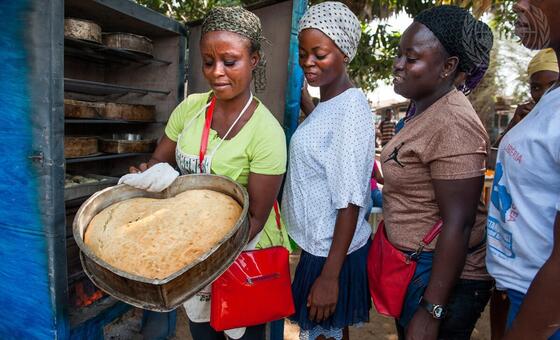
For 30 years, a unique UN fund has focused solely on ending violence against women & girls, mobilizing over $250M and backing 700+ global initiatives.
Let's talk about something that started three decades ago, back in the early 90s. That's when the United Nations General Assembly did something unprecedented. They created a fund, a single-purpose fund, with one clear mission. It was, and still is, the only UN fund dedicated solely to ending violence against women and girls.
That's a pretty big deal, right? We're talking about an organization with countless agencies and initiatives. Yet, for this specific, critical issue, they carved out one dedicated place. It wasn't just another committee or task force. It was a targeted fund meant to channel resources directly where they were needed most.
### The Scale of the Commitment
So, what does thirty years of focused work look like in real terms? Let's put some numbers to it. Over these three decades, this UN Trust Fund has mobilized more than $250 million. Think about that for a second. A quarter of a billion dollars, all directed toward a single, vital cause. That money didn't just sit in an account. It flowed out to support over 700 initiatives across the globe.
That's hundreds of separate programs, each with its own local context and strategy, all united by a common goal. From legal aid services and safe house networks to education campaigns and economic empowerment projects, the scope is vast. It's about addressing the problem from every possible angle because, as we know, there's no one-size-fits-all solution.
### More Than Just Money
Now, funding is crucial, but the real story is in the impact. This isn't just about writing checks. It's about building infrastructure for safety and justice where little or none existed before. It's about changing laws, shifting cultural attitudes, and giving survivors a pathway forward.
Consider what supporting 700+ initiatives means on the ground. It could be training for police officers on how to handle domestic violence cases with sensitivity and proper procedure. It might be funding for a local women's collective that provides counseling and microloans. In some places, it's about setting up the very first hotline where a woman in danger can call for help, confidentially.
- **Legal Reform:** Supporting advocacy groups that push for stronger laws and better enforcement.
- **Survivor Support:** Funding shelters, medical care, and psychological counseling services.
- **Prevention:** Backing educational programs in schools and communities to challenge harmful norms before violence occurs.
- **Data & Research:** Investing in studies to better understand the problem and measure what interventions actually work.
The work is often slow, frustrating, and happens far from the headlines. Progress is measured in inches, not miles. But that's what makes a thirty-year commitment so significant. It's a recognition that eradicating deep-seated violence requires sustained, generational effort. It's not a campaign with an end date; it's a fundamental shift we're trying to build.
As one advocate involved with these initiatives once put it, "Change doesn't come from a single moment, but from countless small acts of courage and support, woven together over years."
### The Road Ahead
Looking back at the journey so far gives us a map, but it also highlights the distance still to travel. A quarter-billion dollars is a massive sum, yet the need continues to outpace the resources. Those 700 initiatives are lifelines in their communities, but countless more are needed.
The fund's existence proves that the international community can prioritize this issue. Its longevity shows a commitment that survives changing political winds. For professionals and advocates in the field, this represents a cornerstone—a stable, global partner in a fight that can often feel isolating.
The real question isn't just what has been achieved in thirty years, but what foundation has been laid for the next thirty. How do we scale up what works? How do we turn local successes into global norms? The fund's story is a testament to the power of focused, long-term action. It's a reminder that even the most entrenched problems can be chipped away at, day by day, initiative by initiative, when there's a dedicated engine pushing the effort forward.