Underground Maternity Wards in Kharkiv Could Redefine Crisis Care
Eleanor Vance ·
Listen to this article~4 min
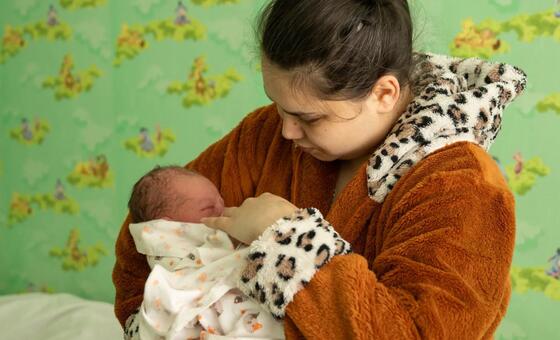
Five years into war, Kharkiv's UN-backed underground maternity wards offer frontline women a safe place to give birth, reshaping crisis healthcare.
Five years into a full-scale war, much of Ukraine remains unstable, and the country's healthcare system is buckling under immense strain. Nowhere is that pressure more visible than in frontline regions, where women are struggling to access essential sexual and reproductive health services. Gynecological checkups, prenatal care, postnatal support, and help for survivors of gender-based violence have all become harder to reach—sometimes nearly impossible.
That's why a new initiative in Kharkiv, backed by the United Nations, is turning heads. The plan? Equip underground maternity units specifically designed for women in labor and their newborns. It's a stark reminder of how war forces innovation, but it's also a story of resilience and what happens when the international community steps up.
### Why Underground Maternity Care Matters Right Now
Let's be honest: the idea of giving birth underground sounds daunting. But for thousands of women in Kharkiv, the alternative is far worse. Air raid sirens, missile strikes, and power outages make above-ground hospitals a gamble. A maternity ward buried safely below street level offers something precious: a fighting chance at a safe delivery.
The UN-backed project isn't just about concrete walls and reinforced ceilings. It's about creating a space where medical staff can work without constantly glancing at the clock or listening for incoming threats. Think of it as a bunker that doubles as a delivery room—a place where the usual chaos of war is, at least for a few hours, kept at bay.
### What This Means for Women and Newborns
For pregnant women in frontline areas, the lack of consistent care has real, heartbreaking consequences. Complications that would normally be caught early go undetected. Women who've experienced violence find fewer safe places to speak up. And new mothers, already exhausted, face the impossible task of caring for an infant while dodging bombs.
This underground facility aims to change that by providing a secure, equipped space where women can receive:
- **Prenatal checkups** in a stable environment, free from the threat of shelling
- **Safe delivery services** with proper medical equipment and trained staff
- **Postnatal support** for both mother and baby, including breastfeeding guidance
- **Referrals for gender-based violence survivors** to connect with counselors and legal aid
It's not a complete solution, but it's a lifeline. And in a war zone, a lifeline can make all the difference.
### The Bigger Picture: Healthcare Under Fire
Kharkiv isn't alone in this struggle. Across Ukraine's eastern and southern regions, hospitals have been damaged or destroyed, and medical supplies are often in short supply. The healthcare system, once robust, is now a patchwork of emergency measures and improvised solutions.
The underground maternity ward is a symbol of that improvisation—but it's also a model. If it works, it could be replicated in other frontline cities, giving more women a safe place to give birth. The UN's involvement signals a broader commitment to protecting maternal health even in the most extreme conditions.
### A Glimmer of Hope in Dark Times
It's easy to focus on the horror of war, and we should never minimize it. But stories like this remind us that human ingenuity and compassion persist even in the darkest hours. The doctors, nurses, and aid workers making this project happen are heroes in the truest sense.
For the women of Kharkiv, this underground ward isn't just a medical facility. It's a statement: their lives matter, their babies matter, and the world hasn't forgotten them. That's worth holding onto, even five years into a war that shows no signs of ending.