Inside the Underground Maternity Wards Built to Survive War
Julia Meyer ·
Listen to this article~5 min
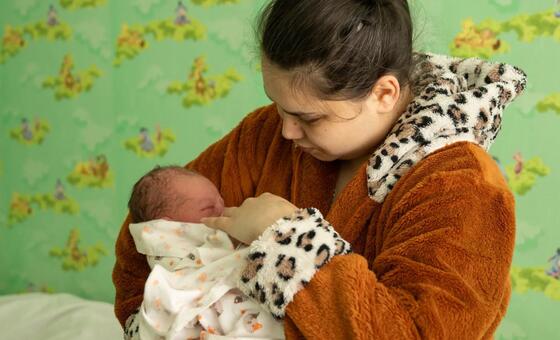
Five years into war, Ukraine's frontline medical system is buckling. Now, underground maternity wards in Kharkiv are giving pregnant women a fighting chance at safe delivery.
Five years into a full-scale war, the situation across many regions of Ukraine is still anything but stable. The country's healthcare system keeps running under an enormous, relentless load. But nowhere is that pressure more visible than in the frontline areas, where women are struggling to get the most basic, essential care.
For mothers and mothers-to-be, the stakes couldn't be higher. Access to gynecological checkups, prenatal appointments, and safe delivery options has become a daily gamble. And for survivors of gender-based violence, finding a safe place to turn for help has grown even harder. This isn't just a logistical problem — it's a matter of life and death.
### Why Underground Wards Are a Game Changer
When the bombs start falling, the first instinct is to get to a shelter. But what if you're about to give birth? Or you've just had a C-section and can't move easily? That's the terrifying reality facing thousands of women in Ukraine's eastern regions. That's exactly why a new initiative, supported by the United Nations, is equipping underground departments specifically for pregnant women and newborns in Kharkiv.
These aren't just makeshift basements with a few cots. We're talking about properly equipped medical spaces — think operating rooms, neonatal units, and recovery areas — all tucked safely below ground. The goal is simple: keep essential maternal care running even when the air raid sirens are wailing. It's a sobering thought, but in a war zone, a delivery room that's protected from shelling is a lifeline.
### The Realities of Reproductive Health in a War Zone
Let's step back for a second and think about what this really means for the women on the ground. Imagine being nine months pregnant, living in a city that's under daily attack. You need to see a doctor, but the clinic is either damaged, closed, or too dangerous to reach. The stress alone can trigger complications, and that's before you even factor in the physical dangers.
The disruption goes beyond just pregnancy. Routine screenings for cervical cancer, treatment for infections, and contraception access have all taken a massive hit. When healthcare systems collapse under war, reproductive health services are often the first to be deprioritized. That's a silent crisis within the louder one, and it affects hundreds of thousands of women.
- Gynecological consultations are often unavailable or severely delayed
- Prenatal vitamins and essential medications are hard to source
- Postnatal support, including mental health care, is nearly nonexistent
- Safe spaces for survivors of gender-based violence are scarce
### What This Means for the Future
It's easy to look at this from a distance and feel helpless. But stories like this also highlight an incredible resilience. The fact that international organizations are stepping in to build these underground facilities shows that even in the darkest times, there's a commitment to protecting the most vulnerable. It's not a perfect solution — nothing is in a war zone — but it's a tangible step toward ensuring that women don't have to choose between giving birth in a bomb shelter or staying above ground and risking everything.
For professionals working in this field, whether you're a humanitarian aid worker, a healthcare administrator, or a policy maker, this is a case study in adaptive response. It's about recognizing that traditional infrastructure won't always hold, and that sometimes, you have to build downward to move forward.
> "In times of war, the measure of a society is not how it treats its strongest, but how it shields its most fragile."
### A Call to Stay Informed and Involved
The situation in Ukraine remains fluid, and the needs are evolving by the week. For those of us watching from the United States, it might feel distant. But the lessons learned here — about emergency preparedness, about prioritizing maternal health, about the sheer will to survive — resonate far beyond the conflict zone.
If you're working in healthcare or humanitarian aid, now is the time to study these models. The underground maternity wards in Kharkiv could become a blueprint for crisis zones around the world. And for the rest of us, staying informed is the first step. Because when we understand what's really happening on the ground, we're better equipped to advocate for the funding and policies that make these life-saving projects possible.