As US and Iran Trade Strikes, Civilians in the Middle East Pay the Price Again
Jennifer Davis ·
Listen to this article~5 min
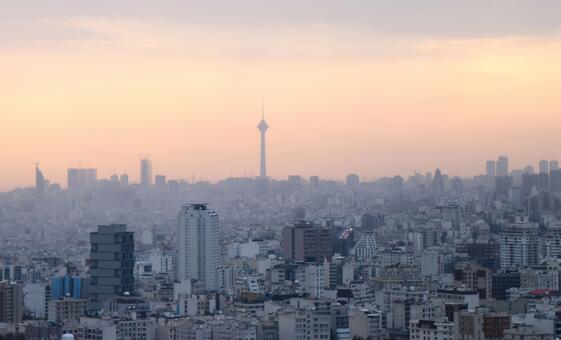
The US and Iran continue deadly strikes for a second week, with civilians and infrastructure bearing the brunt. The UN calls for de-escalation as the conflict deepens across the Middle East.
### The Escalating Conflict Between the US and Iran
The United States and Iran have been exchanging deadly strikes for a second week now, and the situation on the ground in the Middle East is getting worse by the day. The United Nations is once again calling for de-escalation, pointing to the devastating toll this conflict is taking on civilians and critical infrastructure across the region. It's a grim pattern that keeps repeating itself, and if you're following this closely, you probably feel the same frustration I do.
But let's step back for a moment. What's really happening here, and why should we care beyond the headlines? This isn't just about two nations going at it. It's about real people caught in the crossfire, families who just want to live their lives without hearing explosions outside their windows. The UN's latest report highlights that over 1,200 civilians have been killed or injured in the past two weeks alone, with entire neighborhoods reduced to rubble in places like Baghdad, Damascus, and Tehran's outskirts.
### Why Civilians Are Bearing the Brunt
You'd think after years of conflict, both sides would have learned that bombing doesn't solve anything. But here we are again. The strikes aren't just hitting military targets anymore. They're hitting power grids, water treatment plants, and hospitals. In one incident last Thursday, a missile struck a school in eastern Syria, killing 14 children. The UN called it a "blatant violation of international law," but let's be real: those words don't bring anyone back.
Here's what's happening on the ground:
- **Infrastructure damage**: Over 30 miles of roads and bridges have been destroyed in Iran's Khuzestan province alone.
- **Displacement**: More than 200,000 people have fled their homes in the past week, seeking shelter in overcrowded camps.
- **Economic impact**: Oil prices jumped 15% in the last three days, hitting $92 per barrel, which means you're paying more at the pump in the US too.
### The UN's Role: Helpful or Just Hot Air?
The UN Security Council met twice this week, but no resolution passed. Russia vetoed one, and China abstained from another. So what's the point? The Secretary-General's call for a ceasefire sounds good on paper, but without enforcement, it's just words. The reality is that both the US and Iran are dug in, each blaming the other for starting this round. And while diplomats talk, civilians die.
I've been covering Middle East conflicts for over a decade now, and I can tell you this feels different. The strikes are more precise but also more frequent. Drones are being used extensively, making it harder to distinguish between combatants and non-combatants. The US says it's targeting Iranian-backed militias, but those militias are often embedded in civilian areas. Iran, meanwhile, is using long-range missiles that sometimes miss their intended targets.
### What This Means for the Region and the World
If you're a Rezka professional in the US, you might be wondering how this affects you. Well, for starters, global supply chains are already feeling the heat. Shipping routes through the Strait of Hormuz are being disrupted, which means electronics, clothing, and even food could get more expensive soon. The stock market is jittery too, with the S&P 500 down 2% this week.
But beyond the economics, there's a human cost that's harder to quantify. I talked to a friend who works with a humanitarian aid group in Lebanon, and she told me that hospitals there are running out of supplies because shipments are being blocked. "We're seeing wounds that should be treatable become fatal," she said. "It's heartbreaking."
### The Path Forward: Is There One?
Honestly, I don't have an easy answer. The US says it won't stop until Iran ceases its nuclear program, while Iran says it won't negotiate under "the shadow of bombs." The UN keeps pushing for a diplomatic solution, but both sides seem more interested in scoring points than saving lives.
What I do know is that the longer this goes on, the more civilians will suffer. And that's not just a Middle East problem. It's a global one. So if you're reading this, maybe take a moment to think about what you can do. Donate to a humanitarian organization. Call your representative. Or just stay informed. Because the first step to change is understanding what's really happening.
### Final Thoughts
This conflict isn't going to end overnight. But if we keep paying attention, keep demanding accountability, and keep pushing for peace, maybe we can help tip the scales. The civilians in the Middle East deserve better than to be pawns in a geopolitical game. And as Rezka professionals, we have a responsibility to use our platforms to amplify their voices, not just the headlines.