A Weekend of Attacks: The Human Toll Beyond the Headlines
William Davis ·
Listen to this article~5 min
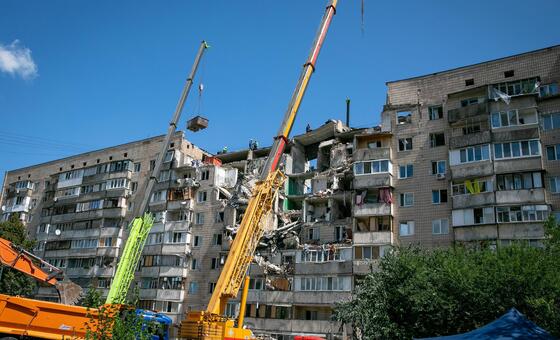
UN officials report a devastating weekend of attacks in Ukraine, with approximately 60 civilian fatalities and over 240 wounded, highlighting the ongoing human cost of the conflict.
The news cycle moves fast. A headline flashes by, and we're on to the next thing. But some stories demand we slow down and look closer. This is one of them. Over the weekend, a series of attacks across Ukraine resulted in a devastating human cost that's still being counted. It's a stark reminder that behind every statistic, there's a person, a family, a community shattered.
### The Official Numbers and What They Mean
On Monday in New York, UN spokesperson Stéphane Dujarric held a briefing for journalists. He laid out the grim figures, citing data from UN humanitarian staff on the ground and Ukrainian authorities. The preliminary reports indicated around 60 civilians lost their lives. More than 240 others were wounded. Think about that for a second. That's not just a number in a news alert. That's hundreds of individual lives violently altered in the span of a few days. Entire weekends, which for many of us are for rest and family, turned into scenes of chaos and loss.
It’s the kind of report that can feel overwhelming. The scale is hard to grasp. So let's break it down a different way. Those 300 casualties? That's like a sudden, catastrophic event emptying out a small-town school or a bustling community center. The ripple effects—the medical teams stretched thin, the families in mourning, the children who witnessed the unthinkable—will last for generations.
### The Context Behind the Casualty Count
You might be wondering how these numbers are compiled. It's not simple. In active conflict zones, information is fragmented and dangerous to collect. UN staff and local officials are often working in real-time, piecing together reports from hospitals, local authorities, and emergency services. The initial count is almost always an underestimate. As rubble is cleared and communications are restored, the full picture emerges, and the numbers often climb.
This process highlights a critical point: the immediate headline is just the first chapter of the story. The long-term consequences—the psychological trauma, the displacement, the destruction of homes and hospitals—are the chapters that are written over years, often out of the spotlight. We tend to focus on the immediate event, but the recovery is where the real, grueling work happens.
- **Immediate Response:** Emergency services racing against time, often under threat themselves.
- **Medical Triage:** Hospitals switching to mass casualty protocols, dealing with complex injuries.
- **Humanitarian Logistics:** Getting aid like medical supplies, food, and water into affected areas.
- **Documentation:** The painstaking work of verifying identities and circumstances, which is crucial for families and for historical record.
As one aid worker put it recently, 'Our job is to measure the immeasurable—to put numbers to human suffering so the world doesn't look away.' That's the sobering reality behind a press briefing in New York. It’s an attempt to translate distant tragedy into a language the international community can understand and, hopefully, act upon.
### Why This Matters Beyond the Region
You don't have to be a policy expert to understand why this resonates far beyond Ukraine's borders. Events like these destabilize regions, strain global food and energy supplies, and test the very frameworks of international law and humanitarian response. They're a bellwether. They show us where systems are failing and where the limits of diplomacy currently lie.
More than that, they're a call to our shared humanity. In a world that can feel increasingly connected yet strangely disconnected, recognizing the individual stories within a large casualty count is an act of empathy. It's acknowledging that a life lost there is as profound as a life lost anywhere. It’s about holding onto that perspective even when the news feels relentless.
The weekend's violence is a tragic update in an ongoing conflict. The numbers from the UN are a necessary, clinical way to convey the scale. But our job, as professionals and as people paying attention, is to remember that the data points are people. The '60' had names. The '240' have long roads to recovery ahead. And that’s the part of the story we must carry forward, even after the headlines change.