Weekend Attacks in Ukraine: The Human Toll Revealed
Jeroen Meijer ·
Listen to this article~5 min
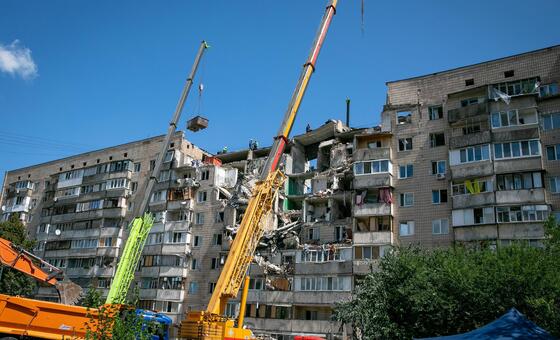
UN briefing reveals approximately 60 civilians killed and over 240 wounded in attacks across Ukraine over the weekend, according to data from humanitarian staff and local authorities.
Over the weekend, a series of attacks across Ukraine resulted in a devastating human toll. The UN spokesperson, Stéphane Dujarric, briefed journalists in New York on Monday, citing data from UN humanitarian staff on the ground and Ukrainian authorities. The initial reports are sobering, and they paint a picture of a conflict that continues to exact a heavy price on civilians.
We're talking about a situation where ordinary people, going about their lives, were caught in the crossfire. It's a stark reminder that behind every headline and every statistic, there are real human stories of loss, resilience, and survival. This isn't just about geopolitics or military strategy; it's about communities being torn apart.
### The Numbers Behind the Headlines
The briefing laid out the hard facts. Preliminary figures indicate that approximately 60 civilians lost their lives. More than 240 others sustained injuries, ranging from minor to severe. These aren't just numbers on a page. Each one represents a person—a father, a mother, a child, a friend—whose life has been irrevocably changed in an instant.
It's crucial to understand the context here. These attacks weren't isolated to a single frontline city. They occurred across various regions of Ukraine, suggesting a widespread pattern of violence impacting multiple communities simultaneously. The scale makes the coordination of emergency response and humanitarian aid incredibly challenging.
### The Role of Humanitarian Organizations
When disaster strikes, the first people on the scene are often local responders and international humanitarian workers. The UN's figures come directly from their staff who are working in incredibly difficult and dangerous conditions. Their job is to assess needs, deliver aid, and document the impact so the world doesn't look away.
Their work involves:
- Providing immediate medical care to the wounded
- Offering shelter and basic necessities to those displaced
- Documenting incidents to support accountability
- Coordinating with local authorities to ensure aid reaches the most vulnerable
It's a monumental task, and they do it while often facing the same risks as the populations they serve. As one aid worker told me once, 'We're not here to take sides in the conflict. We're here because people are suffering, and someone has to help.'
### The Ripple Effects of a Single Attack
Let's think about what these numbers mean in practical terms. An attack happens in a town square or a residential neighborhood. The immediate impact is the casualties—the lives lost and the people injured. But the ripple effects extend much further.
Local hospitals are suddenly overwhelmed. Doctors and nurses work around the clock, facing shortages of everything from bandages to blood. Infrastructure is damaged, cutting off power, water, and communication lines. Families are separated. Children are traumatized. The economic activity of an entire community can grind to a halt.
And then there's the psychological toll—the fear that settles in, the anxiety that the next siren could be the last. It's a weight that entire populations carry with them every single day. You can rebuild a building, but healing that kind of collective trauma takes generations.
### Why This Briefing Matters
You might wonder why a briefing in New York, thousands of miles away, matters. It's about keeping the spotlight on a crisis that has faded from the front pages for many. It's about ensuring that the international community doesn't suffer from what we call 'compassion fatigue.' When the world stops paying attention, funding for humanitarian efforts dries up, and political will to seek solutions evaporates.
Stéphane Dujarric's role is to be that persistent voice, reminding diplomats, journalists, and the public that the conflict is ongoing and its human cost is mounting by the day. It's a difficult balance—conveying the grim reality without numbing people to it, providing facts without reducing human suffering to mere data points.
In the end, these updates are a call to action. They're a reminder that behind the strategic analyses and the political debates, there's a fundamental truth: people are hurting, and they need help. Whether that help comes in the form of humanitarian aid, diplomatic pressure, or simply bearing witness, it's a responsibility we all share in a connected world. The true measure of our humanity might just be how we respond to reports like these.