Wildfires Across Europe and North America Have Burned Nearly 15 Million Acres
Pieter De Groot ·
Listen to this article~5 min
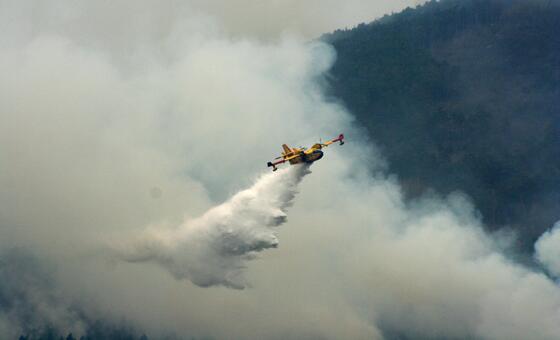
Wildfires have burned nearly 15 million acres across Europe and North America in 2026. The UN warns that without major investment in prevention and forest management, megafires will only get worse.
It's barely into 2026, and already the numbers are staggering. Since the start of the year, wildfires have scorched nearly 6 million hectares of forest across Europe and North America. That's roughly 15 million acres—an area larger than the entire state of West Virginia. The United Nations Economic Commission for Europe (UNECE) is sounding the alarm, and it's not hard to see why.
We're not just talking about a bad fire season. We're talking about a pattern that's becoming harder and harder to ignore. The UNECE warns that without a serious boost in funding for prevention, sustainable forest management, and climate adaptation, we simply won't be able to keep megafires in check. This isn't a distant problem for someone else to solve. It's happening now, and it's affecting real communities, real wildlife, and real air quality.
### What's Driving These Megafires?
If you've been following the news, you've probably noticed that fire seasons are getting longer and more intense. It's not your imagination. A combination of prolonged droughts, record-breaking heat, and shifting weather patterns has turned vast stretches of forest into tinderboxes. In many regions, the fire season now stretches well beyond the traditional summer months, catching communities off guard.
But it's not just about the weather. Decades of fire suppression policies have left forests overcrowded with dry underbrush and dead trees. When a fire does ignite, it has plenty of fuel to spread quickly and burn with incredible intensity. Add in the fact that many rural areas are losing residents, which means fewer people are around to spot and report small fires before they become unmanageable.
### The Human and Economic Toll
Let's put this in perspective. Fifteen million acres is roughly the size of 11 million football fields. Imagine that much land going up in smoke. The costs go far beyond the timber that's lost. There's the expense of fighting the fires themselves, which runs into the billions of dollars. Then there's the damage to homes, infrastructure, and businesses. And let's not forget the health impacts from smoke, which can travel hundreds of miles and affect millions of people.
Here's a breakdown of what's at stake:
- **Property damage**: Homes and businesses destroyed, with insurance claims piling up
- **Economic disruption**: Lost tourism, closed roads, and interrupted supply chains
- **Health risks**: Respiratory issues from smoke, especially for vulnerable populations
- **Ecological damage**: Loss of wildlife habitat and long-term soil degradation
### Why Prevention Matters More Than Ever
The UNECE's message is clear: we can't just keep throwing money at firefighting. We need to invest in the front end of the problem. That means things like controlled burns to reduce fuel loads, creating firebreaks, and thinning out overcrowded forests. It also means helping communities build fire-resistant homes and infrastructure.
One of the most effective tools we have is prescribed burning. It sounds counterintuitive, but setting small, controlled fires during cooler months can actually prevent much larger, uncontrollable fires later. Indigenous communities have used this practice for centuries, and it's gaining renewed attention as a critical part of modern fire management.
> "The fires we're seeing are not natural disasters. They're the result of decades of mismanagement and a changing climate. We have the tools to address this, but we need the political will and the funding to do it," says a UNECE spokesperson.
### What Needs to Change
The UNECE is calling for a multi-pronged approach. First, there's the immediate need for more funding. But it's not just about money. It's about how that money is spent. We need to shift from a reactive stance to a proactive one. That means investing in early warning systems, better data collection, and cross-border cooperation.
Second, sustainable forest management has to become the norm, not the exception. This isn't just about protecting trees. Healthy forests are more resilient to fire, store more carbon, and support more biodiversity. When we manage forests properly, we're not just preventing fires—we're also tackling climate change.
Finally, there's the adaptation piece. Even if we do everything right, fires will still happen. We need to design our communities and landscapes to coexist with fire. That means smarter land-use planning, building codes that account for fire risk, and public education campaigns that teach people how to prepare and respond.
### The Bottom Line
We're at a crossroads. The fires we're seeing in 2026 are a wake-up call, but they don't have to be our future. With the right investments and a willingness to change how we think about forest management, we can reduce the risk and protect the landscapes we depend on. It's going to take effort, but the alternative is unthinkable.
If you're a professional working in this space, now is the time to advocate for change. Push for funding, support research, and educate your community. The fires aren't waiting, and neither should we.