Wildfires Have Already Burned 6 Million Acres—And Experts Say It's Only the Beginning
Robert Davies ·
Listen to this article~6 min
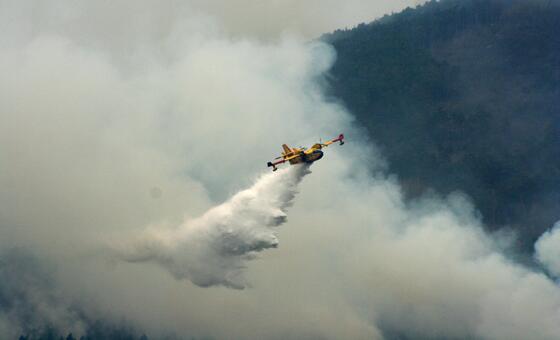
Wildfires have consumed nearly 6 million hectares across Europe and North America in 2026. UNECE warns that without major investment in prevention and climate adaptation, megafires will only get worse. Here's what's at stake and what we can do.
It's barely into 2026, and the numbers are already staggering. Across Europe and North America, wildfires have consumed nearly 6 million hectares of forest—that's roughly 14.8 million acres, or an area about the size of West Virginia. To put that in perspective, imagine every tree in a state the size of West Virginia going up in flames in just a few short months.
That's not a random statistic. That's a wake-up call.
The United Nations Economic Commission for Europe (UNECE) has been tracking these fires, and their latest warning is blunt: without a serious increase in investment in prevention, sustainable forest management, and climate adaptation, we simply won't be able to keep megafires from spreading even further.
### Why This Year Feels Different
If you've been following wildfire news over the past few years, you might be thinking, "Haven't we heard this before?" And you'd be right to ask. But here's the thing—this year isn't just another bad season. It's a pattern that's becoming the new normal, and the data backs that up.
What we're seeing isn't just more fires. We're seeing fires that are bigger, hotter, and harder to control. The term "megafire" used to be reserved for rare, extreme events. Now, it's becoming a regular part of the conversation.
- In North America, prolonged drought conditions have turned vast stretches of forest into tinderboxes.
- In Europe, record heatwaves have dried out vegetation earlier in the season, extending the fire window by weeks.
- In both regions, fires are now reaching areas that were previously considered low-risk.
The result? Communities that never had to think about wildfire preparedness are now on the front lines.
### The Hidden Cost of Doing Nothing
Here's where it gets tricky. When we talk about investing in prevention, it's easy to think of it as an expense. But the reality is that inaction is far more costly—in dollars, in lives, and in the long-term health of our forests.
Consider this: every acre of forest that burns releases stored carbon back into the atmosphere, which accelerates climate change, which creates conditions for more fires. It's a vicious cycle, and we're squarely in the middle of it.
A single large megafire can cost billions of dollars in firefighting efforts, property damage, and lost timber. But the real bill comes later—in healthcare costs from smoke inhalation, in lost tourism revenue, in the expense of rebuilding infrastructure, and in the decades it takes for a forest to regenerate (if it ever does).
### What Prevention Actually Looks Like
The UNECE isn't just pointing out the problem; they're also pointing toward solutions. And here's the good news: we're not starting from zero. There are proven strategies that work, but they require sustained commitment and funding.
**Smart, targeted investments make a real difference:**
- **Controlled burns:** Deliberately setting small, managed fires to clear out underbrush and reduce fuel loads. It sounds counterintuitive, but it's one of the most effective tools we have.
- **Early detection systems:** Using satellites, drones, and AI-powered monitoring to spot fires while they're still small enough to contain.
- **Forest thinning:** Removing dead trees and dense undergrowth that act as fuel for megafires.
- **Community preparedness:** Building fire-resistant homes, creating defensible space around properties, and having clear evacuation plans.
### The Climate Connection We Can't Ignore
Let's be honest: we can build all the firebreaks and install all the detection systems we want, but if we don't address the underlying climate drivers, we're just putting a band-aid on a broken leg.
Rising temperatures are making fire seasons longer and more intense. Warmer air holds more moisture, which means more evaporation from soil and vegetation, which means drier conditions. It's a chain reaction that starts with a changing climate and ends with a forest on fire.
That's why the UNECE's call for climate adaptation isn't just environmental rhetoric—it's practical, dollars-and-cents thinking. Every degree of warming we can avoid reduces the risk of catastrophic fires down the road.
### What This Means for You
You might be reading this from a city apartment or a suburban neighborhood, thinking, "This doesn't affect me." But it does, in ways you might not expect.
Wildfire smoke doesn't respect state lines or national borders. It travels hundreds of miles, turning skies orange in cities that are nowhere near the flames. The economic ripple effects touch everything from insurance rates to the price of lumber to the quality of the air you breathe.
And here's the thing: the solution isn't just in the hands of governments and forestry agencies. It's in how we vote, what we buy, and how we manage our own land. If you own property in a fire-prone area, you have a role to play. If you don't, you still have a voice in demanding that our leaders take this seriously.
### The Bottom Line
We're at a crossroads. We can keep doing what we've been doing and watch the flames get bigger, or we can invest in the kind of proactive measures that have been proven to work. The UNECE's warning isn't a prediction of doom—it's a call to action.
The forests that have already burned this year won't come back overnight. But the ones that haven't burned yet still have a chance, if we're smart enough to protect them.
This isn't about politics. It's about math. The cost of prevention is a fraction of the cost of response. And the sooner we act, the better our odds.
What happens next is up to us.